IG and CMC Markets are close alternatives for UK spread betting, but their strongest selling points differ. IG suits traders who want a choice of trading platforms, particularly those interested in ProRealTime. CMC Markets deserves closer attention if you prefer a charting workspace built around its Next Generation platform.
Neither broker wins every cost comparison. Your markets, trading hours, holding period and use of guaranteed stops can change the result. A narrow advertised spread is useful, but it cannot tell you what a month of trading will cost.
This comparison focuses on UK retail spread betting rather than overseas CFD accounts, share dealing or professional account terms. It forms part of our spread betting broker comparisons, where the aim is to match account features to a trading approach rather than award a winner on brand recognition.
IG or CMC Markets: the practical answer
Start with IG if platform choice matters most. Its proprietary trading platform sits alongside tools including MT4, TradingView and ProRealTime. The attraction is having room to change your trading workspace without necessarily changing broker. Its platform features and educational resources are covered in the DayTrading.com assessment of IG’s trading services.
Start with CMC Markets if you want to assess one substantial native platform. Next Generation combines customisable charts, drawing tools, pattern recognition and research within the trading workspace. That makes it worth testing for traders who would rather keep analysis and order management together. The DayTrading.com assessment of CMC Markets documents those platform features.
| Decision | IG | CMC Markets |
|---|---|---|
| Main reason to shortlist | Choice of trading interfaces and specialist charting tools | Next Generation’s integrated charting and trading workspace |
| Native platform | IG web platform and mobile trading app | Next Generation web platform and mobile app |
| ProRealTime requirement | A reason to investigate IG | Not the reason to choose CMC |
| Guaranteed stops | Available on eligible trades, subject to platform and product terms | Available on eligible Next Generation trades; do not assume MT4 has the same facilities |
| Cost comparison | Measure the contracts and sessions you will trade | Use the same contracts, exposure and measurement times |
| Best deciding test | Does its platform choice improve your actual workflow? | Does Next Generation make analysis and risk control easier? |
The table is a shortlist, not a promise of suitability. A trader using one index chart and two order types may get little benefit from extra platform choices. Someone already using a particular charting package may place much more weight on compatibility.
Trading platforms: the clearest difference
Choose a workflow before choosing software
The useful question is not which platform has more indicators. It is which one lets you follow your trading process without avoidable mistakes. Consider the sequence: finding a market, checking its contract details, placing an order, changing the stop, reducing the position and reviewing the result.
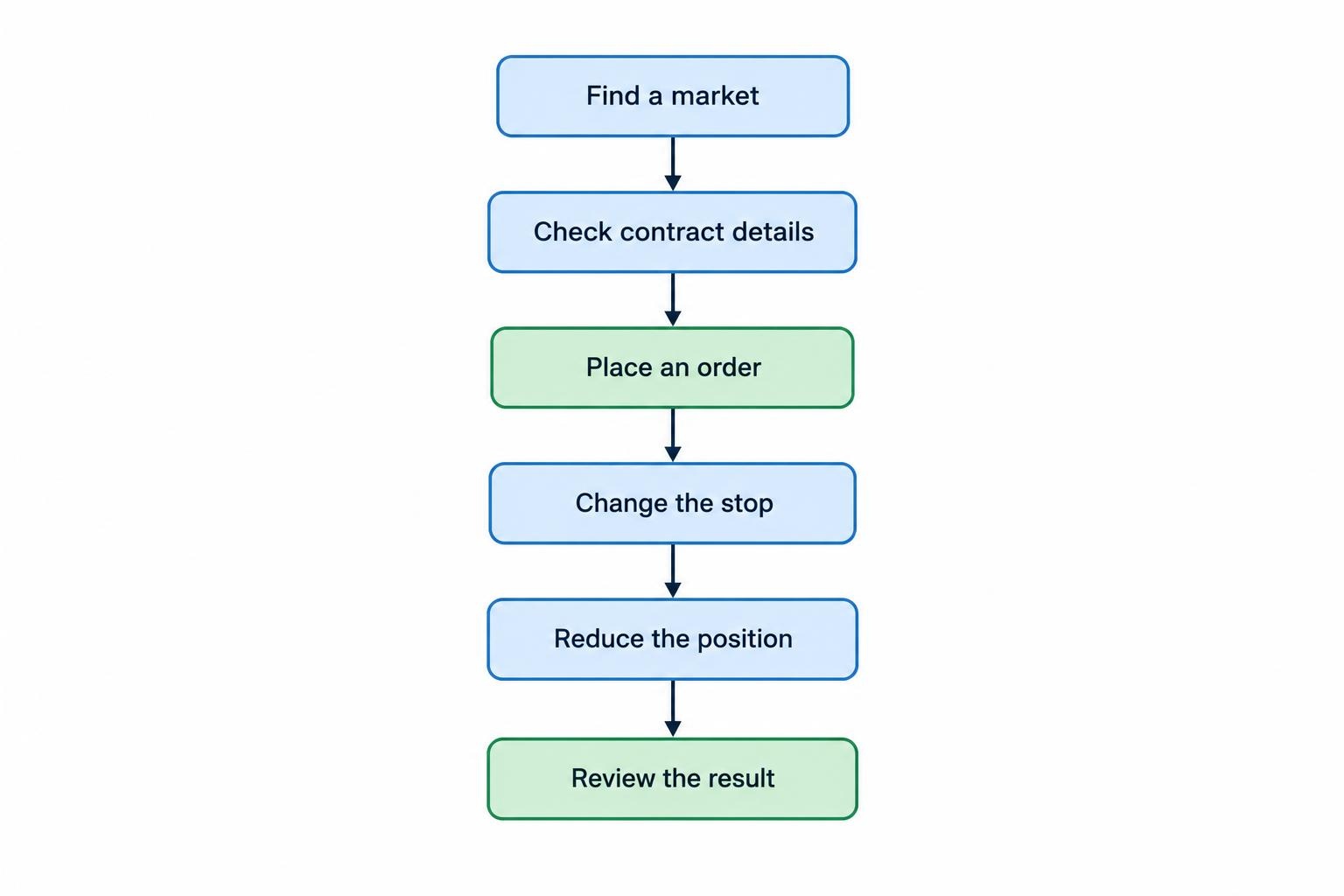
Run that sequence on both native platforms before adding specialist software. Check whether the order ticket makes the stake per point obvious, whether margin is clearly separated from potential loss, and whether you can distinguish an ordinary stop from a guaranteed one. These details deserve more attention than the colour scheme.
For a trader following several markets, workspace organisation matters too. Try arranging the charts and watchlists you actually need. A platform that looks impressive with twelve open windows can become less impressive when the wrong window receives the order.
IG and ProRealTime
ProRealTime is a meaningful reason to investigate IG rather than treating both brokers as interchangeable. If your existing process depends on that software, the cost of recreating charts, alerts and trading routines elsewhere belongs in the comparison.
Check subscription conditions before deciding that access is free. A fee waiver tied to trading activity is useful only if your normal activity meets it. Placing unnecessary trades to avoid a software charge defeats the purpose of saving money.
Our guide to ProRealTime spread betting brokers covers the questions to ask about access, charges and supported account features. For this comparison, the practical point is simple: an established software requirement can settle the shortlist before small differences in spreads become relevant.
TradingView and MetaTrader: check the account, not just the logo
A broker supporting TradingView does not mean every account it offers can connect. IG has a TradingView integration, documented in the TradingView announcement of IG’s integration. Account eligibility and supported functions still need checking before you build a trading routine around it.
For UK spread betting, the distinction is material: CMC’s TradingView connection should not be treated as confirmed spread betting access. Its UK account information excludes spread bet accounts from the connection at the time reviewed. CMC supports MT4 spread betting, but its guaranteed stops are associated with Next Generation rather than MT4. IG charges its guaranteed stop premium if triggered; CMC takes the premium upfront and refunds it when the stop is not triggered. These account and charging distinctions are set out in this UK comparison of IG and CMC platform eligibility and stop charges.
Do not interpret an announced future connection as a working feature. If TradingView is a requirement, ask whether a live UK spread betting account can connect now, then check the available instruments and order types. Our TradingView spread betting broker guide separates chart access from connected execution.
Apply the same discipline to MetaTrader. MT4 and MT5 are different platforms, and support in another country or on a CFD account does not establish support for your spread betting account. Confirm the account type, contract sizes and automation permissions rather than relying on a platform badge.
Mobile trading needs a separate assessment
Do not let the desktop demonstration decide the mobile comparison. On each app, practise changing an existing order, closing part of a position and finding the account’s available funds. Repeat the exercise with a small screen and your normal notification settings.
Check what happens after an interrupted connection. Can you tell whether an order was accepted, rejected or remains pending? A chart refreshing successfully does not answer that question.
If your phone will be your main trading device, use the criteria in our mobile spread betting app comparison. The relevant winner is the app that makes your required actions clear, not the one with the busiest home screen.
Market coverage: compare contracts, not headline totals
Both brokers give traders a broad starting point across familiar asset classes. The more useful comparison is your own trading list. Write down the exact indices, currency pairs, shares and commodities you expect to use, then find their spread betting contracts in each account.
Market totals can be misleading because different expiries, cash products and related contracts may count separately. A broker can offer a large catalogue without offering the precise contract you want at an acceptable stake or trading time.
For each shortlisted market, record the point definition, minimum stake, margin requirement, dealing hours and available order types. Also check whether the instrument is a cash contract or one with an expiry. Two tickets carrying similar market names can produce different financing costs and settlement outcomes.
Shares require more checks than a familiar ticker
A share appearing in a search result is only the beginning. Check whether you can open the direction you want, whether short positions have borrowing charges, and whether dealing is available outside the underlying exchange’s main session.
Consider a trader planning to short a company before its results. Availability, borrowing costs and the treatment of a price gap may matter more than a small spread difference. A cheaper long trade does not establish that the short trade is cheaper too.
Use our guide to share spread betting costs when building that comparison. Keep it separate from share dealing commissions: buying shares outright is a different transaction from opening a spread bet on their price.
Spreads and trading costs: neither broker wins automatically
Headline index pricing provides a useful example of how close the two can be. A published UK broker fee comparison lists a one point FTSE spread for both IG and CMC Markets. That is a starting reference, not evidence that every FTSE spread bet will cost the same throughout the trading day.
Compare the live spread on the actual spread betting contract. Use the same session and similar market conditions, and distinguish a published minimum from an observed quote or an average. Those are different measurements.
A lower minimum matters only when it is available during the periods you trade. If you normally enter positions around an announcement or outside the main cash session, a quiet midday quote may tell you very little.
Turn the spread into pounds
Suppose two otherwise comparable index contracts show spreads of 1.0 and 1.2 points. At £5 per point, an immediate open and close with unchanged quotes would lose £5 on the first contract and £6 on the second. The difference is £1.
Across 100 such trades, that hypothetical difference becomes £100 before other costs. This is why a modest spread advantage can matter to a frequent trader without being decisive for someone trading occasionally.
Do not automatically double the displayed spread when estimating a completed trade. With an unchanged market and spread, buying at the offer and selling at the bid loses one full spread. If conditions change between entry and exit, calculate the result from the actual execution prices instead.
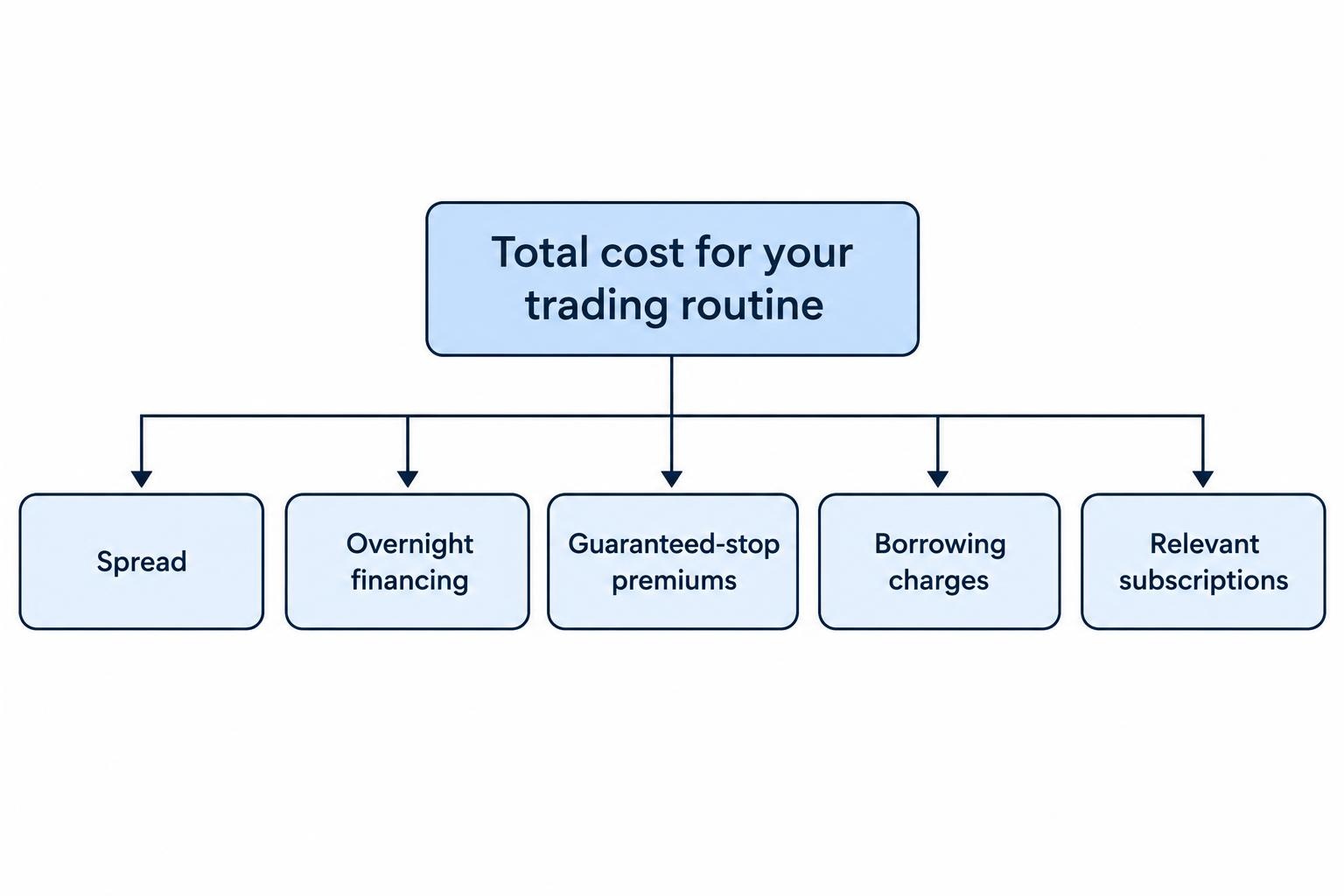
The full comparison should include financing, stop premiums, borrowing charges and any relevant subscriptions. Our guide to comparing total spread betting costs provides a framework for putting those items together without counting the same charge twice.
Measure execution separately
A quoted spread does not establish the price at which every order will execute. Record the requested price, accepted price, execution time and any rejection or partial execution. Compare similar order types rather than mixing market orders with limits.
Do not rank IG or CMC as faster or more reliable from a handful of observations. A small sample can identify a problem worth investigating, but it cannot support a broad claim about execution quality across markets and sessions.
Keep demo observations separate from live results. The demo is useful for comparing controls and learning the ticket; it is not proof that a live order will receive the same fill during a fast market.
Overnight financing can change the cheaper choice
For a position closed before the relevant funding cut-off, the spread may dominate the direct trading cost. For a position held for several days, financing deserves its own calculation. This is where a broker comparison based only on entry spreads becomes incomplete.
Check the funding basis for the contract, direction and holding period. Do not assume that a short position earns interest, that every instrument uses the same calculation, or that one displayed daily rate answers what a weekend will cost.
Financing is also a reason to identify the product correctly. Daily funded bets and contracts with an expiry can package holding costs differently. Compare like with like before deciding that one broker is cheaper.
A holding-cost example
Assume two hypothetical offers provide £20,000 of equivalent exposure. One saves £2 on the spread but has an annualised holding rate 0.5 percentage points higher. On a simple 365 day basis, that rate difference costs approximately £0.27 per day.
After about eight days, the extra holding charge would exceed the £2 spread saving. This is not an IG or CMC rate quotation; it illustrates how the holding period can reverse the result.
The exposure matters more than the margin deposit in this calculation. The FCA’s review of CFD firms’ charging practices, which also covers spread bets, addresses financing charged on total notional exposure and the need to consider costs beyond execution charges.
Before holding a position, estimate the cost in pounds over your intended period and a longer fallback period. A trade planned for three days can become a two week holding surprisingly easily. Our explanation of overnight financing costs covers the calculation in more detail.
Guaranteed stops: compare the terms and cash effect
The charging distinction outlined above matters, but it does not by itself make one broker cheaper. An upfront premium that is refunded if unused is not the same as a permanently higher trading cost. It does, however, affect available cash while the charge remains on the account.
Compare the premium amount alongside the timing of the charge. Also check the eligible instrument, minimum stop distance and rules for changing the order. A cheaper premium is not helpful if the permitted distance does not fit your trade.
Use the chosen platform for this check. A feature available in a broker’s native platform should not be assumed to exist in a connected platform with the same name on the account.
Calculate the protected trade’s loss
Suppose a hypothetical index trade uses a £3 stake and a guaranteed stop 40 points from entry. The price-movement loss at that stop would be £120. If a £6 premium becomes payable, the combined amount would be £126 before financing or other adjustments.
That premium belongs in the trade’s risk calculation, not in a separate mental drawer marked “fees”. The market loss and the premium both reduce your account.
A guaranteed stop controls the exit level under its contractual terms. It does not prevent a losing trade or remove holding costs. Use our guide to guaranteed stop premiums to compare the premium basis and refund conditions rather than the label alone.
Account funding, minimum stakes and occasional use
Separate the minimum deposit from the minimum stake. The first concerns funding an account; the second determines how small you can make a position. Neither tells you how much capital is appropriate for the risk you intend to take.
For example, a hypothetical £1 per point minimum with a 100 point stop produces £100 of planned price risk. If your budget for that trade is £20, the contract does not fit. Having enough money to meet the opening margin does not fix that mismatch.
Check the minimum stake on every market you plan to use. A minimum shown for one currency pair or index is not a universal account minimum. Compare both brokers against your normal stop distances using our spread betting position sizing guide.
Keep payment conditions separate from trading conditions
Check deposit requirements for your chosen payment method, withdrawal procedures and the treatment of unsettled funds. Ask which fees apply to the UK spread betting account rather than importing figures from an international review.
If you expect to trade rarely, read the inactivity terms before leaving money in either account. Confirm what counts as activity, when a charge begins and whether the rule differs between account types. These are straightforward questions, but they are easily overlooked during a platform demonstration.
There is no benefit in choosing a lower account-opening threshold if the minimum stake is too large for your risk budget. Our comparison of spread betting brokers for small stakes focuses on that more useful measure of accessibility.
Regulation and protection: compare the contracting entity
IG and CMC operate through group structures, so the brand name alone is not enough to establish your account protections. Before funding, identify the company named in the client agreement and check that it matches the account and jurisdiction you intended to use.
Use our guide to checking a broker on the FCA Register to verify the legal name, permissions and official contact details. Do not rely on a copied registration number in an advertisement or message.
For UK retail CFD and spread betting business within the FCA rules, protections include leverage restrictions, an account-based margin close-out requirement and negative balance protection. The rules require close-out when account funds fall to 50% of the margin needed to maintain the positions, and protection against losing more than the funds in the account. The FCA’s requirements for CFD and spread betting providers also require standardised risk warnings.
These protections do not make the two brokers interchangeable, and they do not make spread betting low risk. An account can suffer a substantial loss without going into a negative balance.
Keep account-level protection separate from individual trade risk. A close-out rule is not your personal stop-loss plan. Our guide to retail client protections explains the boundaries, including why professional classification should not be treated as a simple route to more buying power.
FSCS cover is not insurance against trading losses
The Financial Services Compensation Scheme can cover eligible investment claims up to £85,000 per person, per firm, subject to its conditions. It may apply where a failed firm cannot return money or assets owed to a client; it does not compensate for poor investment performance. Those distinctions appear in the FSCS investment protection rules.
Do not confuse that investment limit with bank deposit protection or assume every balance receives automatic compensation. Eligibility depends on the circumstances and the firm involved.
For either broker, establish which company holds the account and what protection applies before transferring a large balance. Our guide to FSCS protection for spread betting accounts covers the questions to ask without treating compensation as a substitute for due diligence.
Tax treatment does not make IG better than CMC
Choosing between the two brands does not create a different tax regime for an otherwise equivalent transaction. The contract, your circumstances and the applicable tax rules matter.
For ordinary betting winnings, the capital gains exemption comes from section 51 of the Taxation of Chargeable Gains Act 1992. That is a legal rule, not a broker benefit that one provider can improve by changing its platform.
Income tax needs its own qualification. A spread bet’s treatment can depend on its contractual terms and economic substance, including whether winnings arise from carrying on a trade. HMRC’s guidance on spread betting and trading income sets out that distinction.
Do not choose a CFD account simply because its platform connection is more convenient while assuming the transaction remains a spread bet. Confirm the product before placing an order. Our guide to whether spread betting is tax-free covers the wider qualifications; obtain tax advice if your circumstances are not straightforward.
Research, education and customer support
Evaluate research by whether it helps you carry out a defined task. Finding an earnings date, identifying an economic announcement and checking a market’s trading hours are useful tasks. Reading more commentary is not necessarily one.
During the demo comparison, choose the same three markets and try to find the information needed for your next planned trade. Note whether you can reach it without leaving the platform and whether its publication time is clear.
Keep sentiment tools in perspective. A measure of other clients’ positioning can add context, but it does not establish that following or opposing those clients will be profitable. It should not replace a trading rule you can explain.
Test support with an account-specific question rather than “How do I trade?” Ask which company would contract with you, whether your chosen platform supports guaranteed stops, and how the holding charge works on a named spread betting contract.
A useful answer should identify the account and product rather than send you to a general marketing page. Keep a written record where the response affects eligibility, charges or order handling. One quick response is encouraging, but it is not enough to rank either broker’s service across all situations.
Which broker suits your trading approach?
Intraday index trading
For an intraday index trader, compare spreads during the session you use and the steps required to manage orders. If you close before the relevant funding cut-off, financing will have less influence on that trading routine than it would on a multiday position.
Give extra attention to the first few minutes around your normal entry time. Can you see the current spread, confirm the stake and change an order without switching screens? A platform advantage should show up in those actions.
Use the same written rules when assessing both brokers. Otherwise you may end up comparing two different trading methods rather than two providers. Our guide to day trading with financial spread betting covers the broader trading considerations.
Swing trading and overnight positions
For a trader holding positions over several sessions, compare the expected holding cost alongside the spread. Include the possibility that the trade lasts longer than planned, and check any expiry or rollover arrangements.
Guaranteed stop terms may also carry more weight if you intend to hold through a company announcement or a market closure. Assess the premium and permitted stop distance against the risk you want to take, not against the cheapest possible trade.
The better broker for a short intraday position need not be the better broker for the same market held for a fortnight. Our guide to swing trading with spread bets addresses that change in priorities.
Established charting and automation routines
If you already depend on a charting package or automated routine, compatibility should be an early pass-or-fail test. Check the live spread betting account, supported contracts, order behaviour and what happens when the connection is interrupted.
IG’s platform choice makes it a sensible first investigation for a ProRealTime requirement. CMC remains worth assessing where its native workspace or an eligible MetaTrader setup fits the process. Do not assume a strategy transfers unchanged because the software name matches.
How to compare IG and CMC before funding
Use a repeatable assessment rather than spending an hour clicking around each platform. A sensible spread betting demo account comparison should answer a few concrete questions.
- Select the same markets. Record the contract name, point value, minimum stake, trading hours and product type.
- Use the same risk budget. Calculate the stake from your intended stop distance rather than from the margin available.
- Observe comparable quotes. Check spreads at your normal trading times over several sessions, noting announcements and unusual conditions.
- Practise order management. Place a pending order, change its stop, cancel it, and practise closing part of a position where supported.
- Estimate a month’s cost. Include expected trading frequency, holding periods, premiums and subscriptions, then confirm uncertain terms with support.
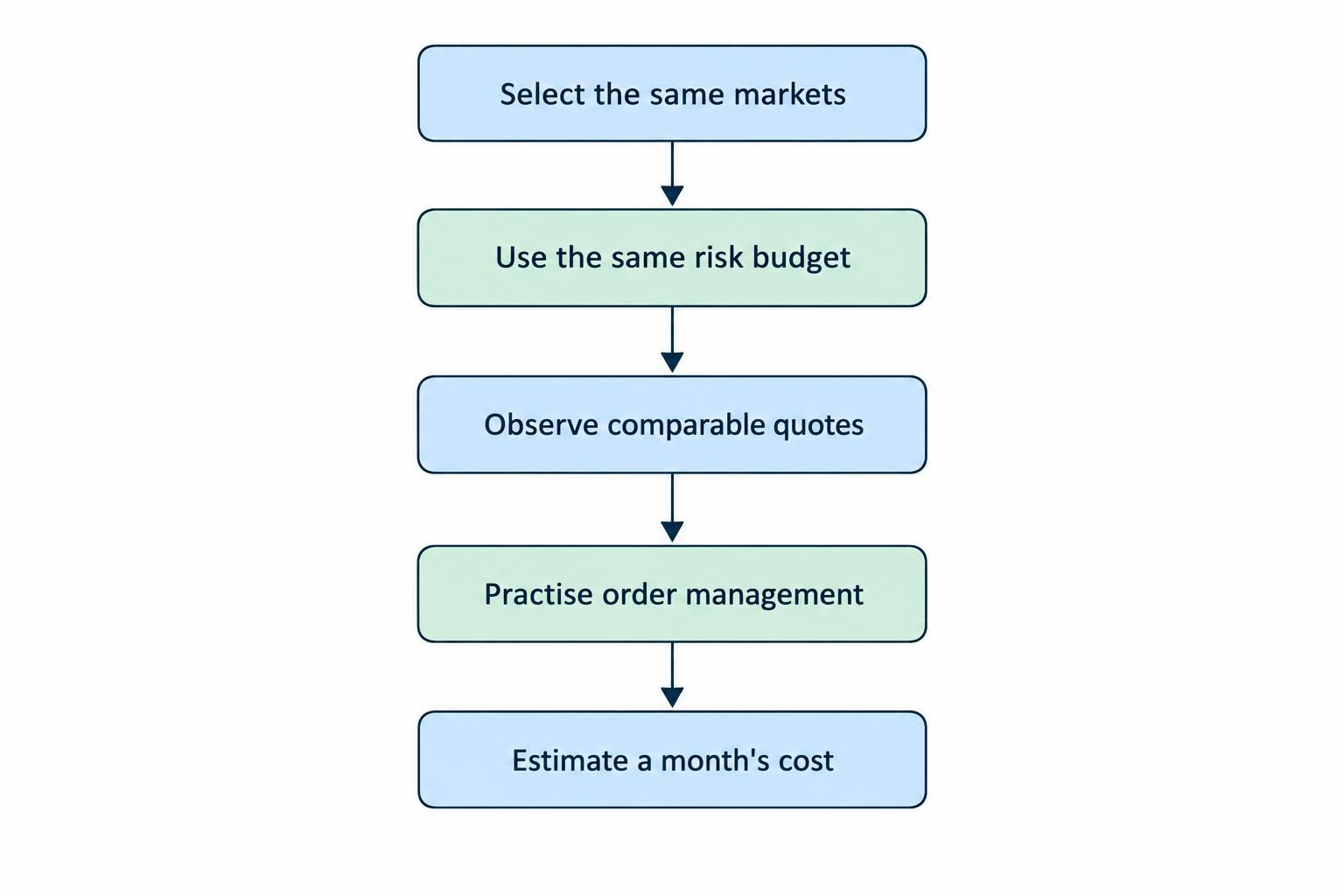
Keep the results in pounds wherever possible. “Cheaper spread” is less useful than “approximately £12 less for my expected monthly activity”, provided the estimate uses comparable contracts and realistic assumptions.
Once a platform passes the demo assessment, live trading still involves financial risk and may behave differently. If you proceed, use a stake that fits your loss budget rather than treating the first deposit as an amount that must be put to work.
Which should you choose?
IG is the stronger starting point when platform choice is the deciding requirement. It is particularly relevant to a trader investigating ProRealTime or wanting alternatives to a single native interface. The benefit must justify any software charges and the effort of managing the chosen setup.
CMC Markets is a strong starting point when Next Generation fits the way you analyse and manage trades. Test that proposition directly rather than assuming its charting features will improve your results. Check platform-specific restrictions before relying on connected software or a particular stop type.
For cost, there is no defensible blanket winner without defining the trade. Compare the same spread betting contract, exposure, session, holding period and protection. A broker can be cheaper for one of those combinations and more expensive for another.
If both meet your requirements, choose the one that makes your normal trading process clearer and whose total charges fit it better. If neither offers a suitable minimum stake or the controls you need, keeping both off the shortlist is a valid result.