Spread betting broker reviews should answer a practical question: does this provider suit the markets, trade sizes and holding periods you intend to use? A familiar name or an advertised minimum spread is not enough to settle that.
The reviews below cover two verified UK providers, CMC Markets and Spreadex. They are assessments of published information, not accounts of hands-on platform testing. For a broader starting point, use our spread betting broker directory.
UK Spread Betting Broker Review Summaries
CMC Markets
Review focus: trading across several market categories. CMC Markets offers online and mobile trading across shares, indices, currencies, commodities and treasuries, with financial spread betting available in the UK and Ireland. These services appear in the London Stock Exchange company profile for CMC Markets.
That breadth makes CMC a candidate for traders who want to compare opportunities across different asset classes. The useful question is whether it covers your actual watchlist on acceptable terms, not how many instruments appear in the catalogue. A long market list is not a trading plan.
CMC Markets UK plc holds FCA firm reference number 173730. The FCA’s identification of the genuine CMC Markets UK entity distinguishes it from an unrelated clone operation.
Assessment: shortlist CMC if access to several market categories matters to you. Before choosing it, compare the quoted spread, minimum stake, financing rate and available orders for each instrument you expect to trade. This review does not establish that CMC is the cheapest provider or that every platform route offers identical products.
Spreadex
Review focus: spread betting through TradingView. Spreadex Limited holds FCA firm reference number 190941. The FCA’s confirmation of the genuine Spreadex Limited separates the authorised business from an unrelated firm using a similar name.
For traders who already use TradingView, the ability to keep chart analysis and order entry together deserves consideration. It can reduce the need to move between interfaces, although convenience should not replace checks on pricing, order controls and available instruments.
Spreadex supports spread betting functionality through its TradingView integration. The TradingView announcement covering Spreadex spread betting confirms that this connection extends beyond CFD trading.
Assessment: shortlist Spreadex if TradingView forms part of your normal workflow. Check that the exact spread betting symbols you need are available, then confirm the order types and market data arrangements for that connection. An integration alone does not establish execution quality or make the provider suitable for every trading style.
Compare Brokers Using the Same Trade
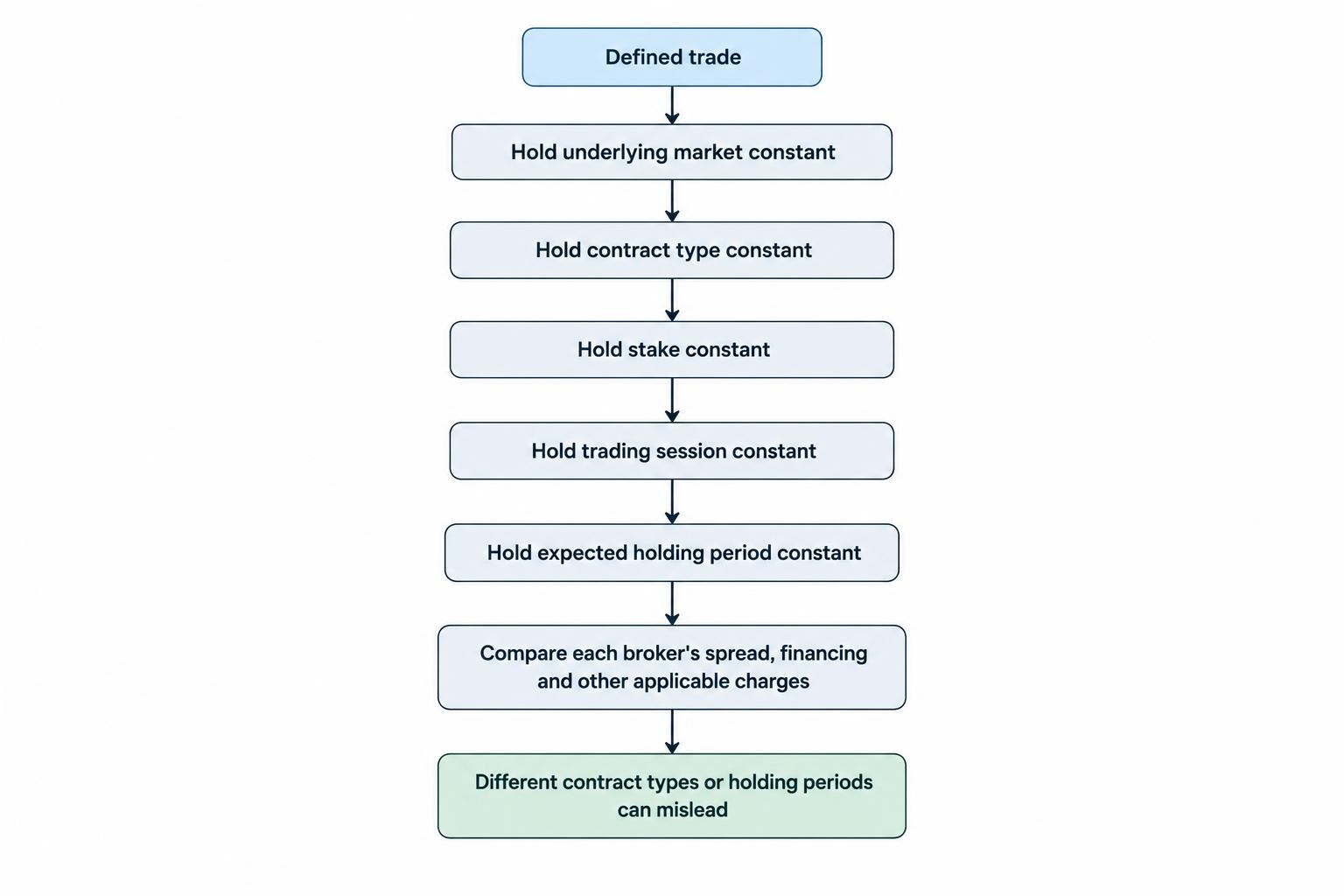
A useful comparison holds the trade assumptions constant. Choose the same underlying market, contract type, stake, trading session and expected holding period. Comparing a cash index bet with an expiring contract produces a misleading cost comparison before either trade opens.
| Review area | What to compare |
|---|---|
| Trading costs | The spread during your trading hours, financing and other applicable charges. |
| Position size | Minimum stake and whether it fits your planned stop distance and loss budget. |
| Order controls | Available stops, restrictions, amendment rules and any guarantee premium. |
| Account service | Funding methods, withdrawal conditions and support availability. |
Consider an illustrative index trade at £2 per point. A one-point spread represents £2 of spread cost; a 1.5-point spread represents £3. That £1 difference may matter over repeated trades, but it does not settle the comparison if financing or execution costs differ.
For positions held across several nights, calculate the expected holding cost as well. Our guide to comparing total spread betting costs provides a fuller framework. Do not treat margin as a fee: it is collateral, rather than a charge for placing the trade.
Check the Platform Before Committing Funds
Test ordinary tasks before judging the platform by its charting tools. Find a market, enter a stake, attach a stop, amend the order and locate the resulting transaction record. Repeat the process on the device you expect to use most.
Pay attention to how clearly the order ticket shows stake size, margin and potential loss at the chosen stop. If an interface makes those checks awkward, attractive charts do not compensate.
Use a practice account where available, but keep its purpose narrow. It helps assess the interface and rehearse order entry; it does not prove how live orders will execute under pressure. Our spread betting demo account guide covers those distinctions.
Verify the Account Before Funding It
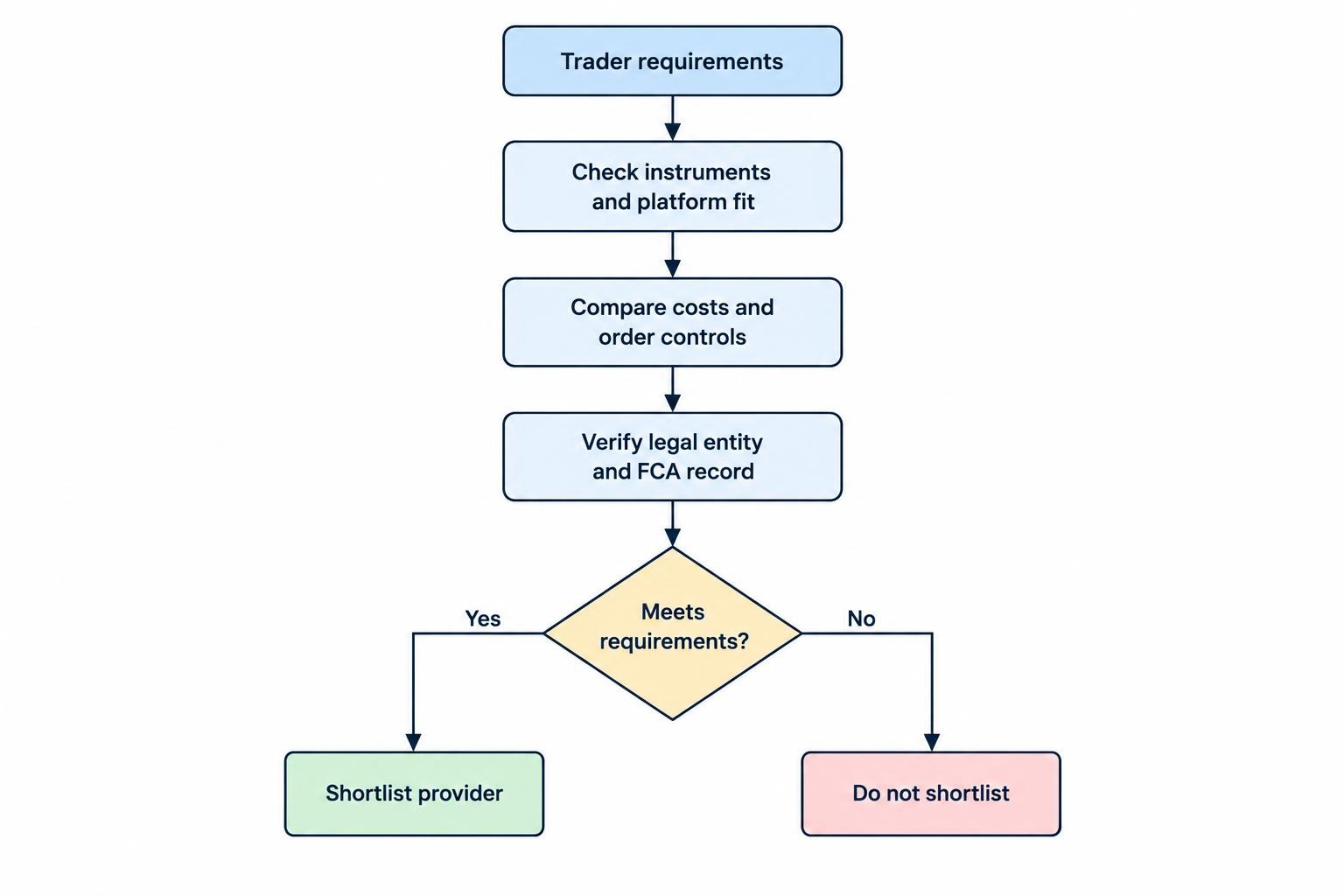
Match the legal entity in the account agreement to its FCA record. Check permissions, restrictions and contact details rather than accepting a registration number copied into an advertisement. Follow the steps in our guide to checking a broker on the FCA Register.
Keep the final decision tied to your requirements: suitable stake sizes, acceptable costs, usable controls and clear account terms. These reviews provide a shortlist, not a universal winner.
Risk warning: spread betting can produce rapid losses. Compare providers only after deciding whether the product is appropriate for your finances and experience, and do not fund an account with money needed for essential spending.