Spread betting risk management means controlling how much a trade can cost you, how much exposure you carry across your account, and when you stop trading. It starts before entry, not after a position turns red. A trading idea needs a loss budget as well as a price target.
Financial spread bets are high risk and are not suitable for everyone. The FCA’s information on CFDs and spread betting also warns that moving from retail to professional client status removes some protections. Risk controls can reduce exposure; they cannot make trading safe or turn an unprofitable strategy into a profitable one.
Separate Your Trading Capital from Your Loss Budget
Only commit money you can afford to lose without affecting essential spending, debt repayments or emergency savings. Then distinguish between the amount deposited in your account and the amount you are prepared to risk on each decision. They are not the same number.
Set a cash loss budget before choosing your stake. You can express that budget as a percentage of account equity, meaning your account value after allowing for open profits and losses. Recalculate it when equity changes rather than continuing to size trades against an old balance.
A percentage is a planning tool, not a safety certificate. Even small planned losses can accumulate, and actual losses can exceed expectations when execution differs from the price you intended.
Size the Stake Around the Trade
The basic relationship is:
Planned price loss = stake per point × distance from entry to stop.
Suppose a hypothetical account has £5,000 of equity and the trader chooses a £50 loss budget, equivalent to 1% of equity. With a stop 25 points from the executed entry price, a £2 stake per point produces a £50 price loss if the stop executes exactly as planned. This is an illustration, not a recommended risk percentage.
That calculation excludes financing, stop premiums and other charges. Reduce the stake if those costs must fit within the same budget. Ordinary stop slippage can still push the loss above it. Measure the distance using the relevant entry and exit prices so you do not count the spread twice.
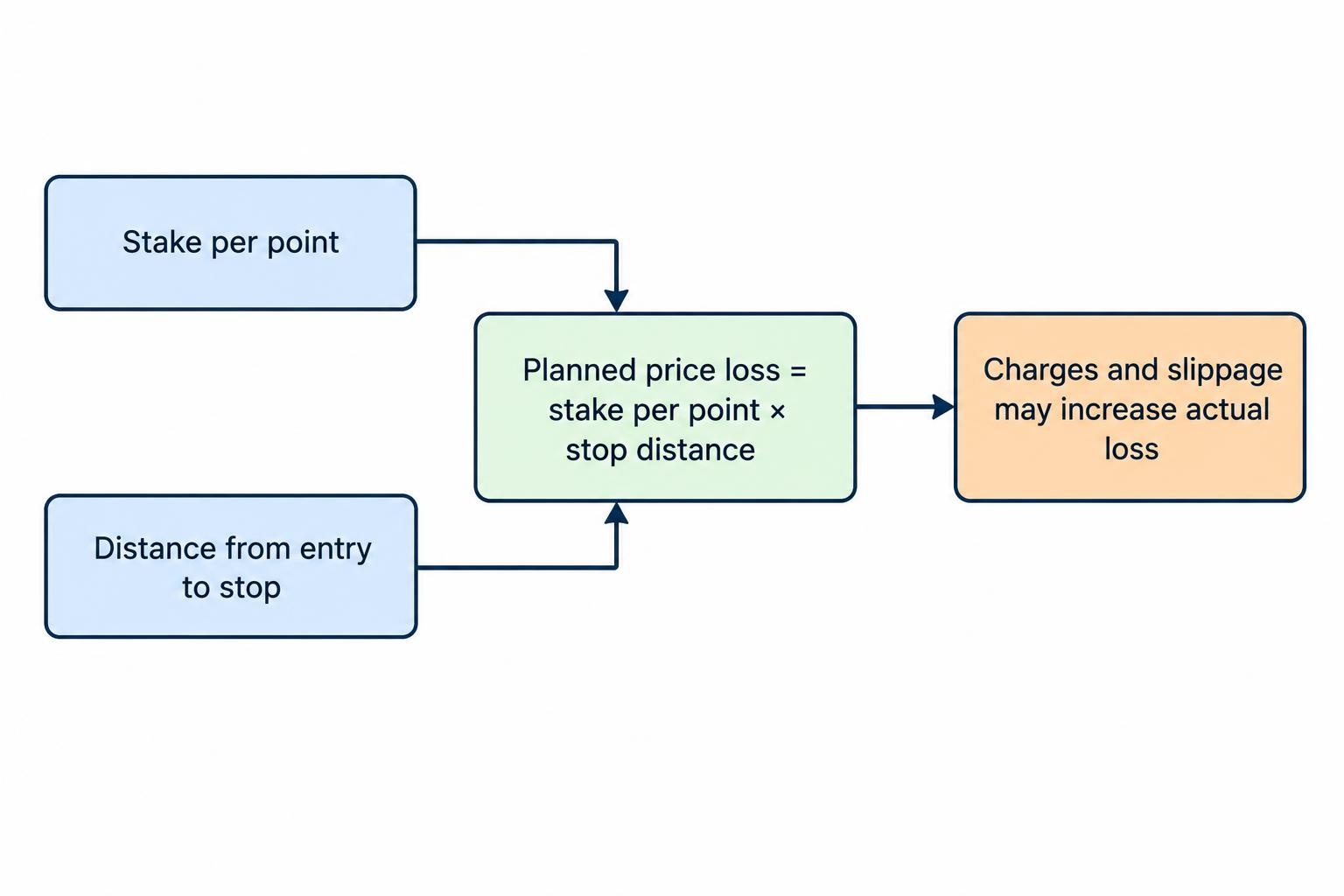
Choose an exit that fits the trading idea, then calculate the stake. Do not squeeze the stop closer just to justify a larger bet. The position sizing guide develops this process for different account sizes and stop distances.
Know What Your Stop Actually Protects
An ordinary stop loss does not guarantee the exit price. A fast move or a market gap can produce a worse fill, increasing the loss beyond your calculation. The Financial Ombudsman’s guidance on stop execution covers disputes involving this difference between the chosen level and the executed price.
A guaranteed stop, where available, fixes the exit level under the provider’s terms. Check the premium, minimum distance, eligible markets and restrictions on amendments. Include any applicable charge in your budget. A guarantee addresses execution risk on that position; it does not make the underlying trade worthwhile.
Keep stop placement connected to the reason for entering. Moving a stop farther away after an adverse move increases the risk you originally accepted. Our guide to managing risk with stop losses covers placement and adjustment decisions.
Do Not Confuse Margin with Maximum Loss
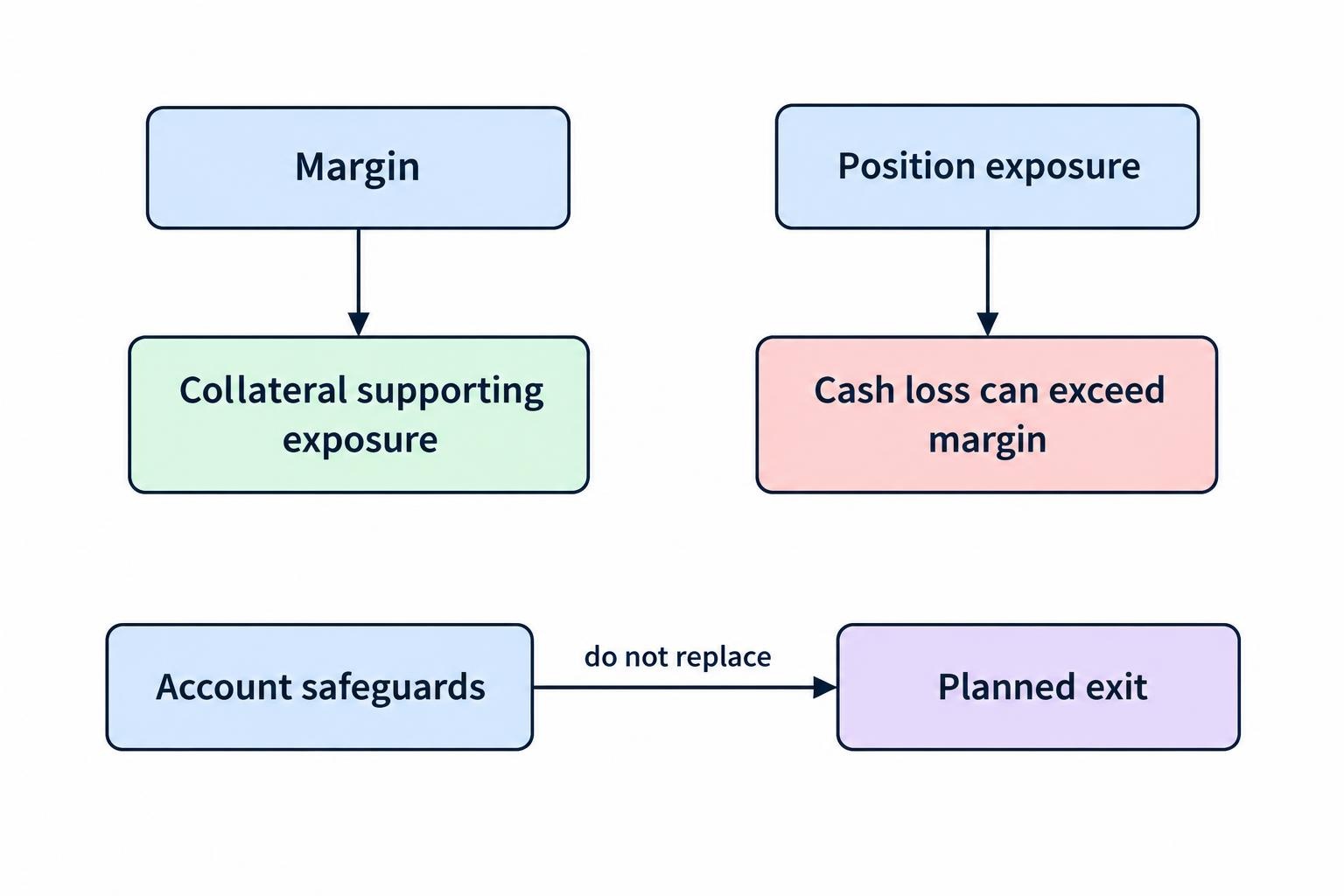
Margin is collateral required to support exposure, not the amount a trade can lose. A position requiring a relatively small deposit can still generate a large cash loss. Available margin is permission to open exposure, not a sensible position size.
For UK retail accounts covered by the FCA’s rules, firms must close positions as soon as market conditions allow when account net equity falls below 50% of the required margin. Negative balance protection also restricts liability to funds dedicated to those products in the account. These are separate safeguards under the FCA’s retail margin and negative balance rules.
Neither safeguard preserves your deposit or replaces a planned exit. Leave room for adverse moves and charges rather than operating close to the provider’s closure threshold. Check the account terms before trading, including how positions may be selected for closure.
Measure Risk Across the Whole Account
Several small trades can create one large exposure. A long index position and long positions in shares belonging to that index may respond to the same market shock. Different trade names do not necessarily mean different risks.
Add the planned losses across open positions, then consider what happens if related markets move against you together. Include pending orders that could activate during the same event. Review portfolio correlation and spread betting risk before treating separate positions as diversification.
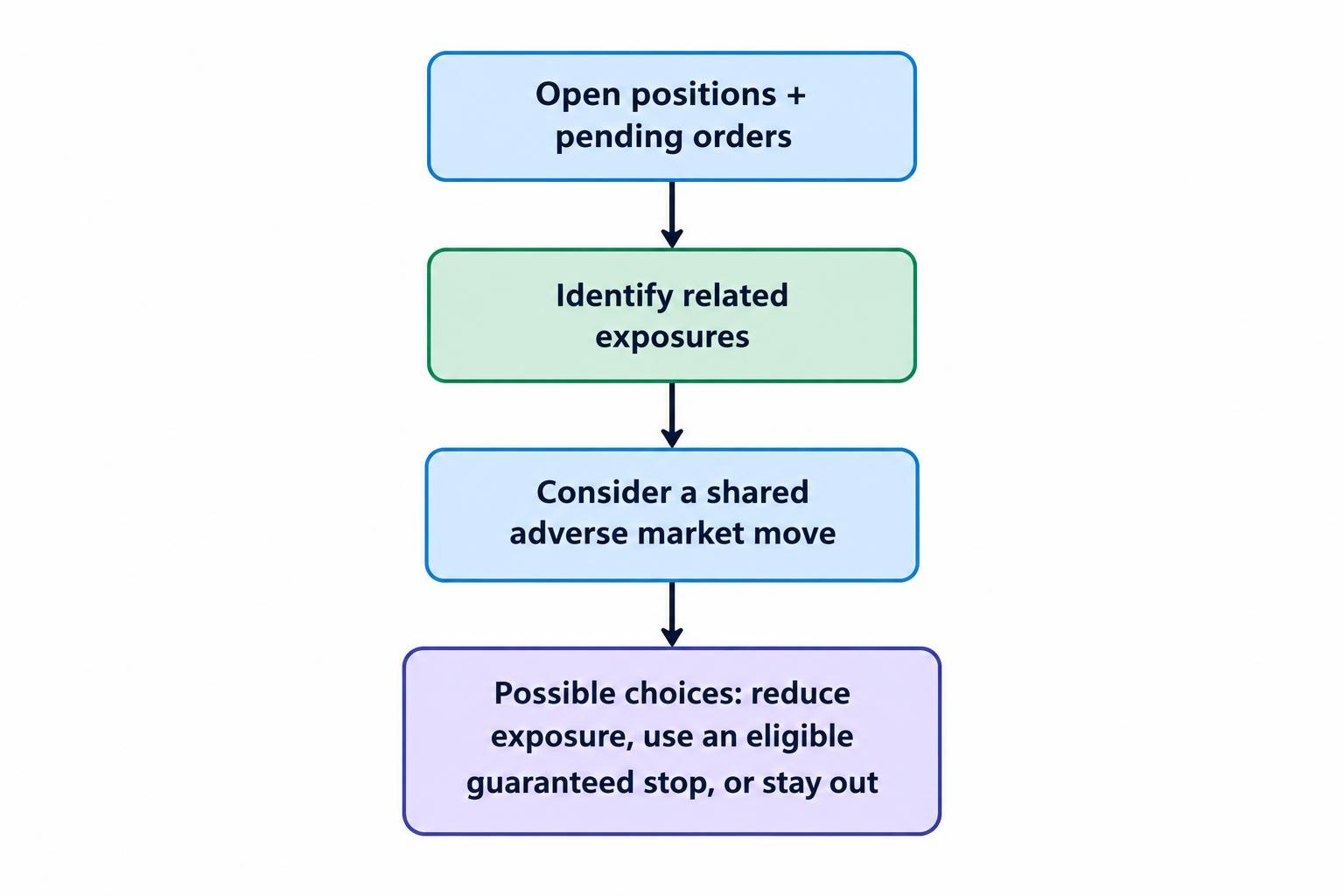
Also decide whether to hold through results announcements, economic releases or market closures. Reducing exposure, using an eligible guaranteed stop or staying out are possible responses. Watching a screen is not protection against a price gap.
Set Rules for Losing Streaks and Drawdown
Decide in advance what loss will trigger a pause, a reduction in stake or a review of the strategy. A daily loss limit is a decision rule, not a guaranteed ceiling: open positions may still suffer slippage.
Keep records of entry, intended risk, actual exit, costs and whether you followed the plan. Separate a valid losing trade from an avoidable mistake. Increasing the next stake to recover the previous loss changes the risk budget precisely when judgement may be under pressure.
A pause should have a purpose. Review execution, market conditions and rule compliance before resuming, rather than returning simply because the urge to recover losses has cooled.
Put the Controls into a Written Trading Plan
Before submitting an order, confirm four points:
- The cash loss you intend to accept, including relevant charges.
- The stake, exit level and whether that exit is guaranteed.
- The combined exposure after accounting for existing positions and pending orders.
- The conditions that require you to reduce risk or stop trading.
The spread betting risk management guide brings these controls into a fuller planning process. Keep the rules short enough to use consistently. If a trade only works after ignoring the loss budget, margin buffer or exposure limit, change the trade or leave it alone.