An account inactivity fee is a charge for leaving a spread betting account unused beyond the period set out in its terms. It is separate from the spread paid when trading, and it can reduce your cash balance even when you have no open bets.
Before taking a break, check what triggers the charge, when deductions begin and how to stop them. Inactivity belongs in your review of spread betting costs and fees, particularly if you keep a second account for occasional use.
How Account Inactivity Fees Work
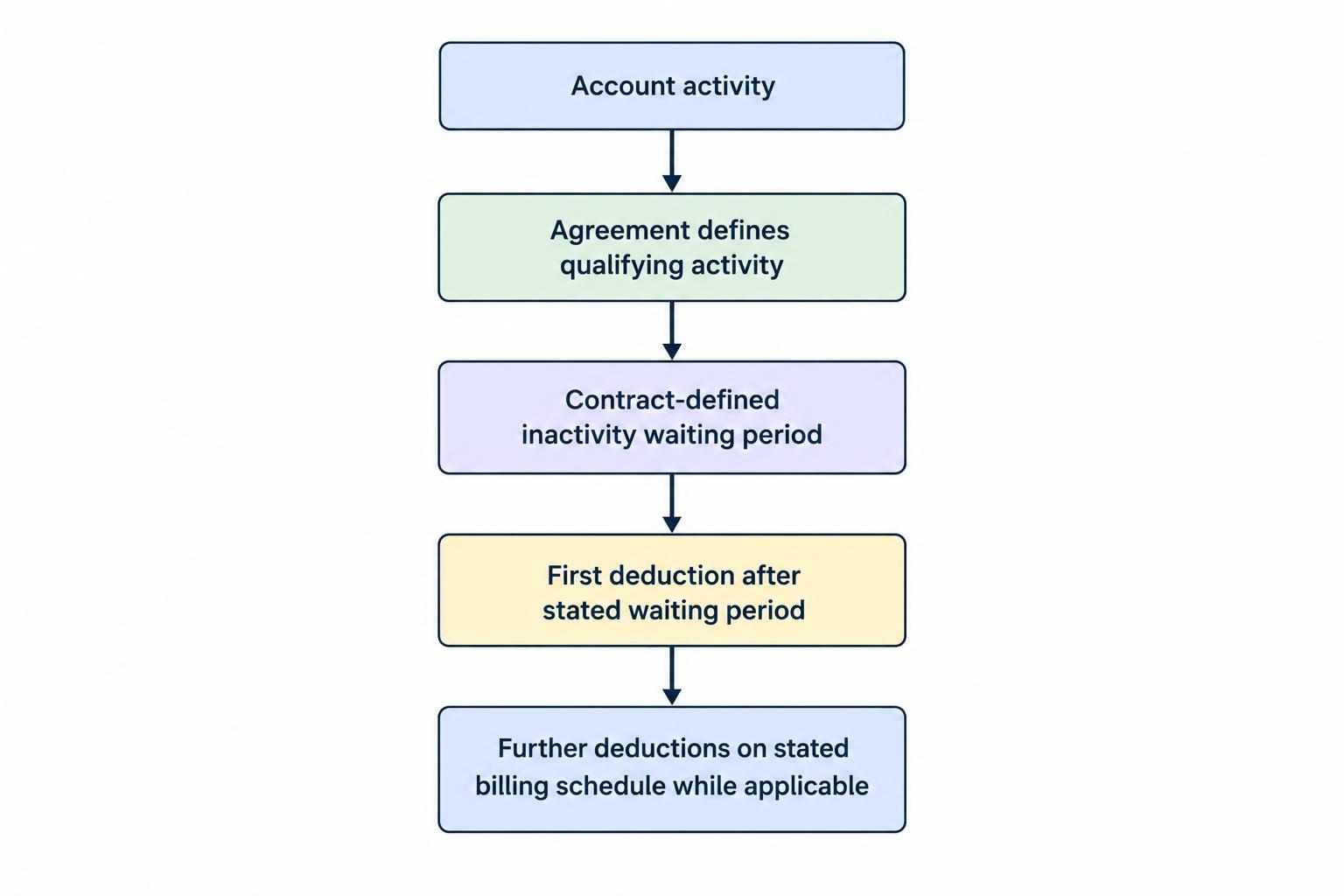
The account agreement and fee schedule determine whether a charge applies. Read them together: the fee schedule should identify the amount, while the agreement may contain the definition of inactivity, charging conditions and closure procedure.
Do not treat “inactive” as another word for “not logging in”. Check which actions count. Opening the app, making a deposit, holding an existing position and executing a new trade are different activities. Establish which, if any, resets your account’s inactivity period rather than assuming they are interchangeable.
| Term to check | Question to ask |
|---|---|
| Qualifying activity | What action resets the inactivity clock? |
| Waiting period | When does inactivity begin, and when is the first deduction? |
| Charging frequency | Is the fee monthly, quarterly or charged on another schedule? |
| Account coverage | Does the policy apply separately to each account? |
| Balance treatment | What happens when the remaining cash is smaller than the fee? |
For UK retail investment services, the FCA’s costs and charges disclosure rules require disclosure of relevant service and product costs, with timing requirements for providing that information. A headline about low trading costs is not a substitute for reading the account charges.
Keep inactivity separate from position holding costs. A bet left open during a trading break still needs monitoring, and overnight financing charges require their own calculation. Whether holding that position prevents an inactivity charge is a separate contractual question.
A Worked Inactivity Fee Example
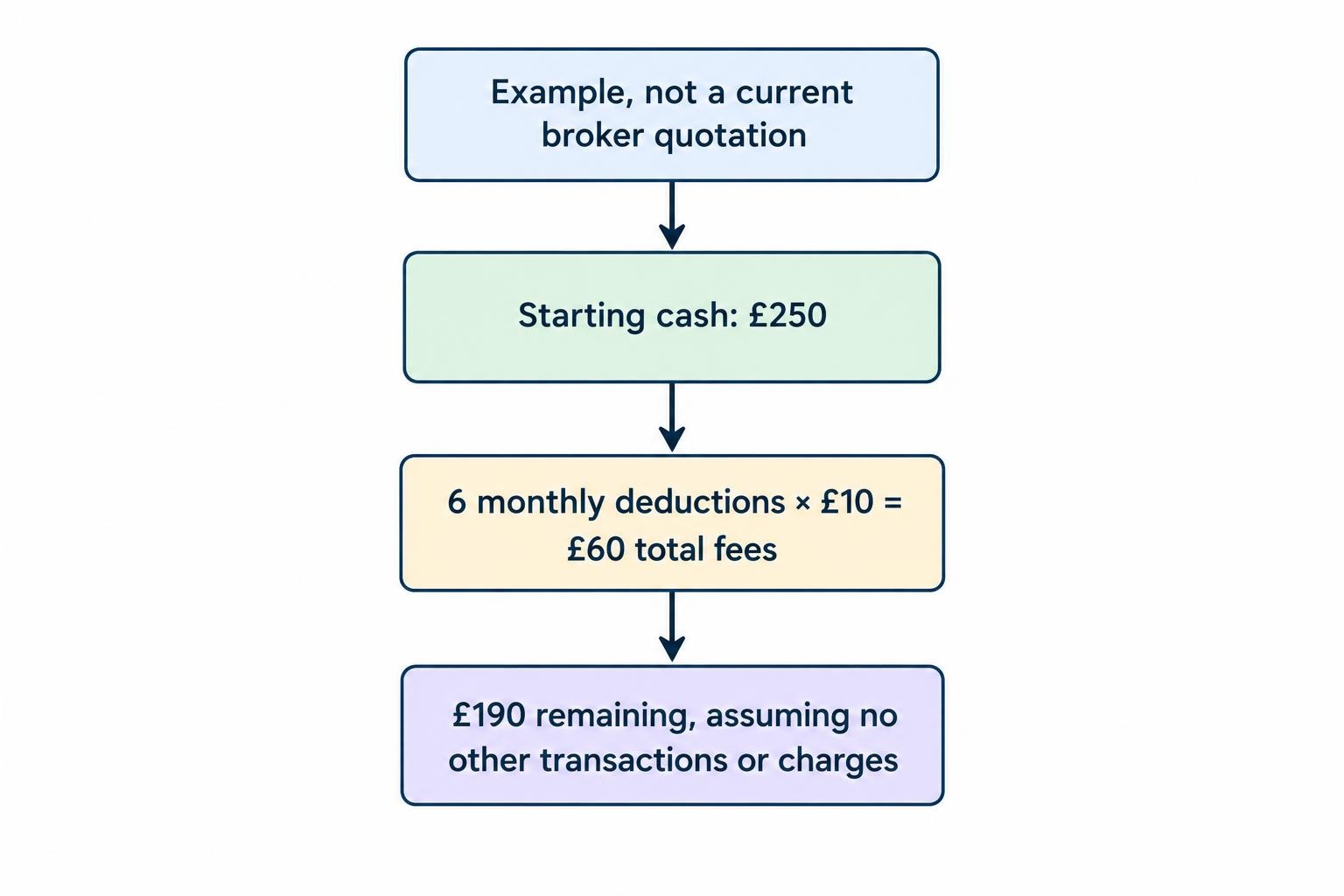
Suppose a hypothetical account charges £10 each month after 12 months without qualifying activity. You leave £250 in cash, hold no positions and take no action that resets the clock. These figures illustrate the calculation; they are not a current broker quotation.
If six monthly deductions apply, the cost is 6 × £10 = £60. Your remaining balance is £190, assuming no other transactions or charges. The fee has consumed 24% of the original £250 balance without a single losing trade.
Count chargeable months, not simply months away from the platform. Under this example, the initial 12 months are the waiting period. Check the actual first charging date and billing cycle before estimating the cost of a longer break.
Do not extend the calculation below zero without checking the terms. Ask whether deductions stop at zero, whether a smaller final balance is taken, and whether any outstanding charge remains payable. A zero balance and a formally closed account are not the same thing.
How to Avoid Paying for an Account You Do Not Use
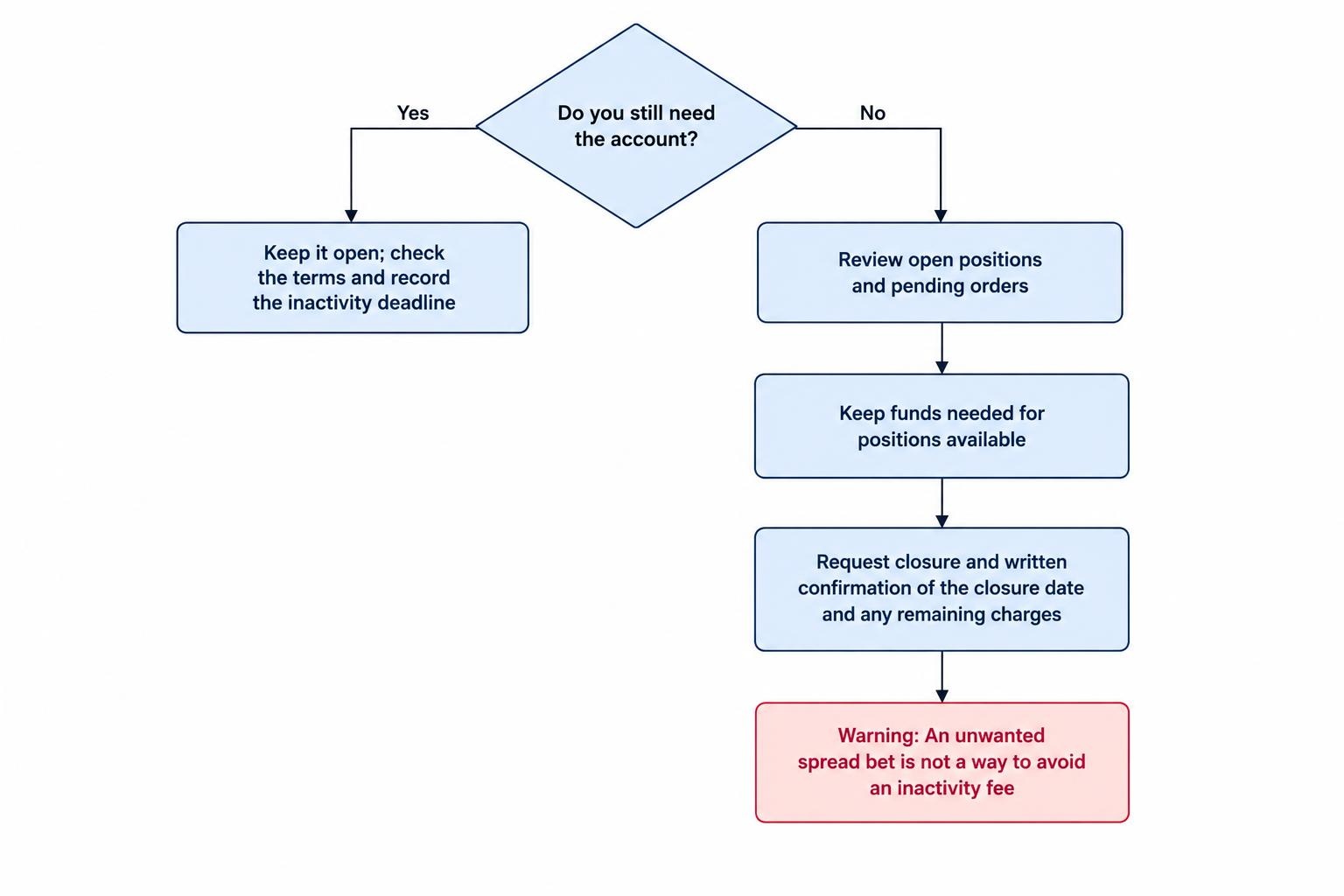
Before a planned break, decide whether you genuinely need to keep the account open. If you do, record the inactivity deadline and set a reminder comfortably before it. Keep your contact details current and read notices about changes to charges.
If you no longer need the account, review open positions and pending orders before requesting a withdrawal or closure. Do not remove money needed to support an existing position. Ask the provider to confirm the closure procedure, any remaining charges and the date on which the account will stop attracting fees.
Withdrawable cash is not proof that an account has been closed. Request written confirmation rather than treating an empty balance, deleted app or cancelled marketing emails as the end of the relationship.
Do not place an unwanted spread bet just to avoid an inactivity fee. That substitutes a known account charge with trading costs and market risk. If you have no trading reason to enter, consider withdrawal or closure instead. The fee schedule should not become your trading strategy.
What to Do If an Inactivity Charge Appears
First, reconcile the deduction against the agreement that applied at the time. Check the last qualifying activity, the waiting period and each charging date. Your spread betting account statements can help you build a dated record rather than relying on memory.
Ask the provider to identify the contractual clause, explain its calculation and supply any notice introducing or changing the fee. If you believe the charge was applied incorrectly, make a formal complaint and state the remedy you want.
Communication can matter. In a 2017 Financial Ombudsman decision about spread betting inactivity charges, the complaint was upheld because the firm should have done more to establish that the customer knew about and agreed to the continuing deductions. The decision did not find inactivity fees inherently unfair. It concerned that customer’s circumstances, not an automatic right to a refund.
For an unresolved complaint, the FCA’s financial services complaints procedure sets out the escalation route. Firms generally have eight weeks to provide their written outcome; eligible complaints can then be referred to the Financial Ombudsman Service if the response is unsatisfactory or the deadline has passed.
Include Inactivity in Your Account Comparison
Assess the fee against how you expect to use the account. For a backup account, the cost of leaving cash untouched deserves attention. For an account you use regularly, transaction and holding costs still need checking.
Use a total spread betting cost comparison rather than choosing on one charge alone. Before leaving an account unused, establish the trigger, calculate the possible deductions and decide whether keeping it open serves a purpose.