Financial spread betting profits are normally free from UK Income Tax and Capital Gains Tax for an individual placing bets purely as wagers. The other side of that treatment matters just as much: losses normally bring no tax relief. HMRC’s guidance on betting and gambling confirms that a person placing spread bets is not normally carrying on a taxable trade.
That is the starting position, not a blanket promise for every account. Company dealings, commercial hedging and arrangements connected with an existing business need separate consideration. This guide covers the main distinctions for UK individuals and businesses, without treating “tax-free” as a reason to take more trading risk.
The Usual Tax Position for Individuals
For personal spread betting undertaken purely as wagering, the usual position is straightforward:
- Profits: normally outside Income Tax and Capital Gains Tax.
- Losses: normally unavailable as deductions against income or taxable investment gains.
- Share ownership: a spread bet gives exposure to price movements rather than ownership of the underlying shares.
- Exceptions: the purpose of the arrangement and the identity of the account holder can change the analysis.
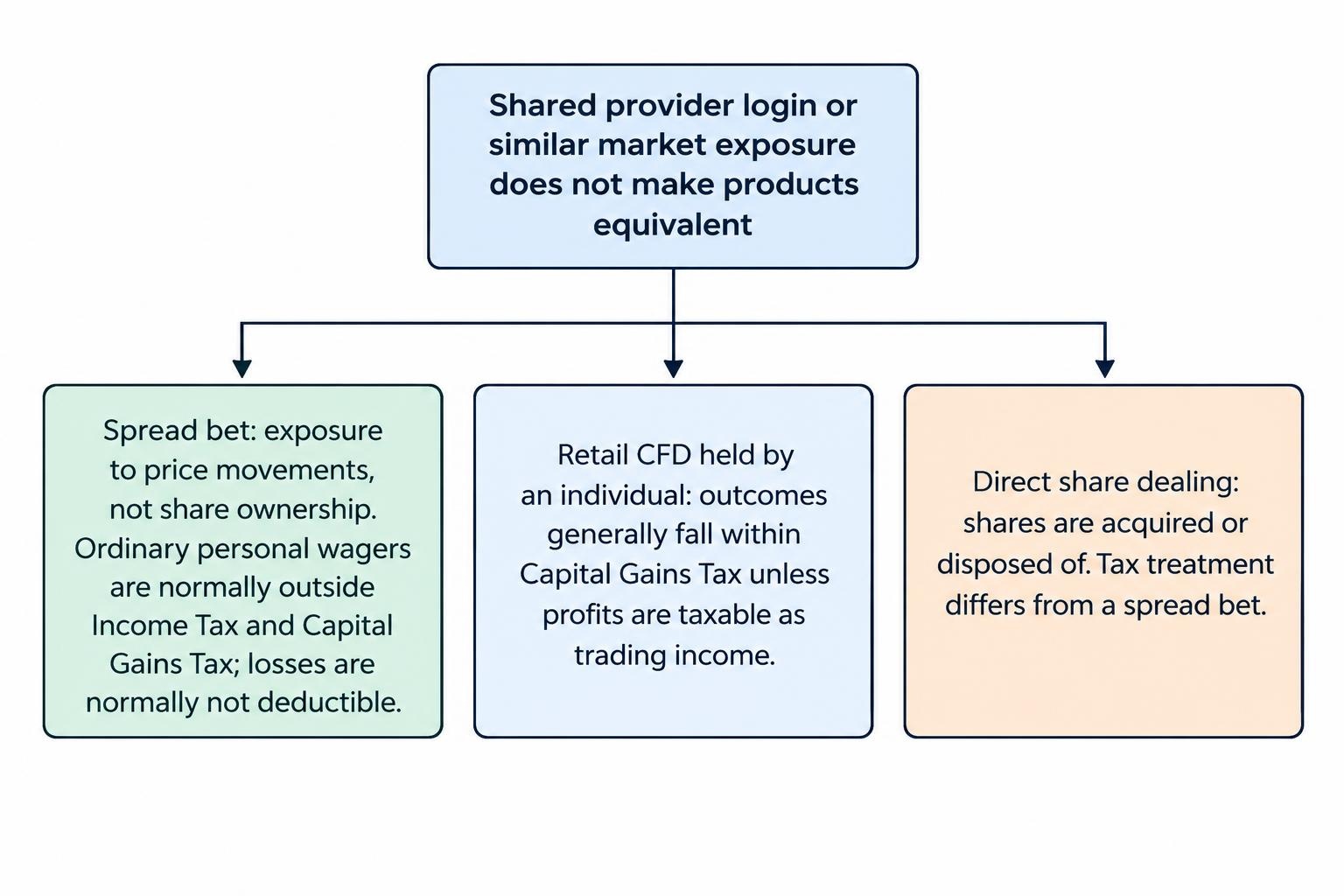
Start by checking what contract you actually hold. A platform may offer spread bets, CFDs and share dealing through separate accounts. Similar market exposure does not mean identical tax treatment. Keep the account agreement and product description rather than relying on the name shown on a trading screen.
Capital Gains Tax and Spread Betting Losses
Ordinary financial spread bets do not produce chargeable capital gains or allowable capital losses. HMRC’s financial spread betting guidance states that no assets are acquired or disposed of through these bets. Their outcomes therefore sit outside the normal Capital Gains Tax calculation.
This is not an annual allowance that you use up. A qualifying spread betting profit does not become chargeable simply because it exceeds the Capital Gains Tax annual exempt amount.
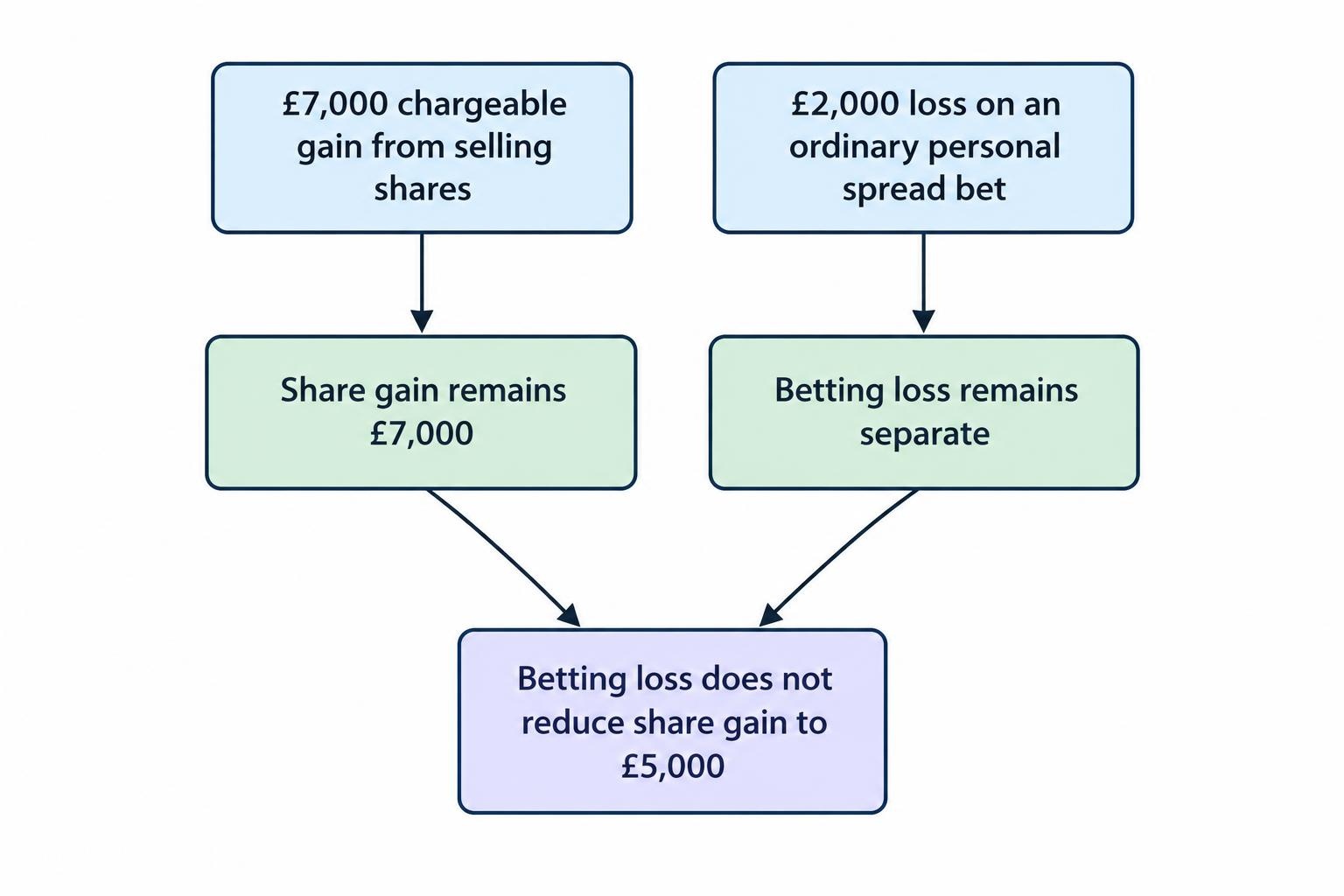
The loss treatment is less welcome. Suppose you make a £7,000 chargeable gain from selling shares and lose £2,000 on ordinary personal spread bets. You cannot subtract that betting loss to turn the share gain into £5,000. The two outcomes remain separate.
Before choosing between products, read the guide to tax treatment of spread betting losses. Comparing tax on profitable trades alone leaves out what happens when a strategy loses money.
Does Full-Time Spread Betting Become Taxable?
Trading every day, following a system or earning enough from bets to cover living costs does not, by itself, turn betting into a taxable trade. HMRC’s guidance on professional gamblers expressly distinguishes systematic or successful gambling from carrying on a trade.
There is no simple rule that says a person must keep a salaried job to preserve the ordinary treatment of their wagers. Equally, calling an activity “personal betting” does not settle the position if it forms part of a wider commercial arrangement.
A useful distinction is between placing bets for yourself and running another activity that earns fees or business income. Do not assume that receipts from services, subscriptions or other commercial work receive the same treatment as your betting results. Keep those activities separate for review.
The guide to spread betting tax for professional traders covers this boundary in more detail. If the arrangement is unusual, get advice on the actual contracts and money flows rather than relying on how many hours you spend at the screen.
Why Spread Bets Do Not Attract Share Purchase Stamp Taxes
A spread bet on a company’s share price does not transfer the shares to you. There is therefore no share transfer on which to charge you Stamp Duty or Stamp Duty Reserve Tax. The statutory SDRT charge on securities transfers applies to agreements to transfer chargeable securities for consideration, rather than a wager settled by reference to their price.
Do not confuse that distinction with a fee waiver. Spreads, overnight financing and other account charges can still reduce returns. Tax-free is not cost-free, and a financing bill does not become friendlier because no shares changed hands.
When comparing a spread bet with a direct share purchase, assess the intended holding period and total costs as well as tax. Avoid choosing the contract on one headline benefit.
Commercial Hedging and Company Accounts
Spread Bets Used for Business Purposes
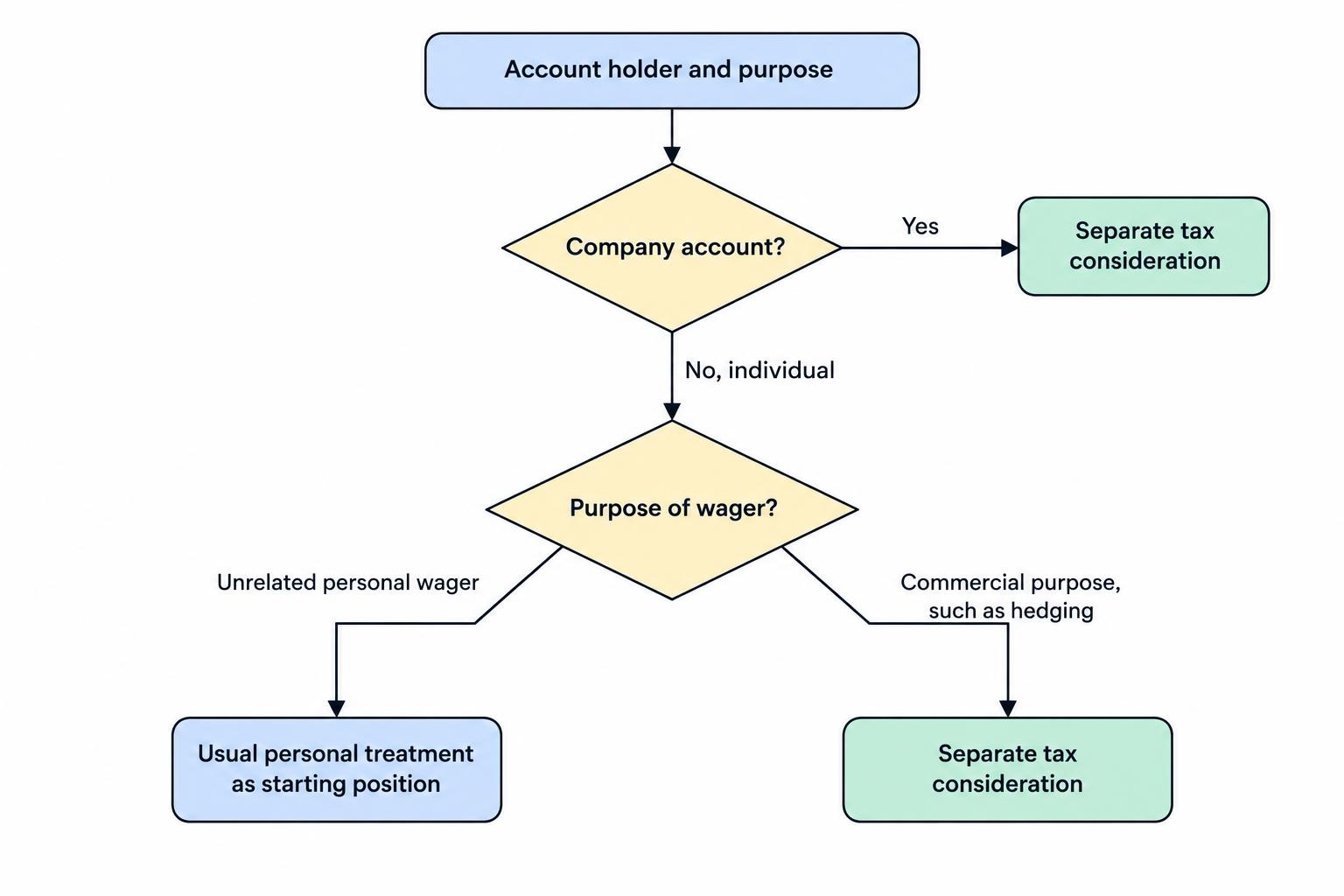
A spread bet used for a commercial purpose may fall outside the ordinary treatment of a personal wager. HMRC’s guidance on derivative contracts and commercial spread bets distinguishes individual wagers from commercial uses, including hedging. Derivatives held for trade purposes can produce trading profits and losses.
Consider a sole trader using a currency position to offset exchange rate exposure on business purchases. That purpose raises a different tax question from an individual making an unrelated currency bet. Do not assume both receive the same treatment.
The guide to hedging with spread bets and tax covers the distinction. Keep evidence of the exposure being hedged and the reason for entering the position.
Spread Betting Through a Company
A company does not inherit an individual’s treatment of personal wagers. A company’s financial spread bet will generally be considered under the corporate derivative contracts rules, subject to the statutory conditions and exclusions.
Before using company funds, review the guide to spread betting through a company with your accountant. Keep company positions and personal betting records separate.
Spread Betting and CFDs Have Different Tax Treatment
A CFD can track the same market as a spread bet while producing a different tax result. For individuals, retail CFD outcomes generally fall within Capital Gains Tax unless the profits are taxable as trading income. HMRC’s guidance on retail contracts for differences also brings relevant account debits and credits into the calculation when the contract closes.
That distinction affects both gains and losses. Do not merge CFD results with ordinary personal spread betting results just because they appear under the same provider login.
The practical comparison is covered in spread betting versus CFD tax treatment. Compare the contracts using a realistic pattern of wins, losses and costs, rather than assuming either product is always the better choice.
Records, Withdrawals and Tax Return Questions
Keep records even where you expect the betting results to be outside tax. The aim is to show what the transactions were, who entered them and why. A bank withdrawal alone tells you little about those questions.
A useful file should contain account statements, the account agreement, product classifications, deposits, withdrawals, charges and any written tax advice. For commercial hedges, add the documents connecting the position to the business exposure.
Reconcile the records rather than treating every withdrawal as profit. A payment back to your bank could contain returned deposits as well as winnings. Equally, an account balance may include positions that remain open. Keep these amounts identifiable so an adviser can review the activity without reconstructing it from scattered screenshots.
Use the spread betting record keeping guide to organise that evidence. If you already complete a tax return for other reasons, ask how any unusual arrangement should be treated before entering it as taxable income or claiming a loss.
When to Get Individual Tax Advice
Get advice before relying on the ordinary personal betting treatment where a company holds the account, positions hedge business exposures, or betting sits alongside another commercial arrangement. Also seek advice if another country may have taxing rights. Do not assume the UK treatment answers an overseas tax question.
Give the adviser the contracts and a clear explanation of the activity, not just an annual profit figure. Ask for the reasoning in writing. For ordinary personal wagers the starting rule is favourable, but the contract and its purpose still matter more than the marketing label.