Spread betting research should help you compare trading costs, assess evidence and spot gaps in a broker’s claims. A low advertised spread is worth investigating, but it is not a complete assessment of price, execution or risk.
This hub organises research around the questions that matter before opening or funding an account: what you pay, how orders are handled, what client loss figures mean, and which legal entity provides the service. Use the studies and comparisons to investigate those questions rather than chase a single “best broker” score.
Compare Observed Spreads, Not Just Advertised Minimums
Start with the broker spread study when assessing quoted dealing costs. A useful comparison separates advertised minimum spreads from observations collected during stated trading sessions. It should identify the instrument, contract type, observation dates and number of observations.
Keep the comparison consistent. Comparing a cash index quote during its main session with a forward contract outside that session introduces differences that need explaining. Look for typical readings and the range of observations, not just the smallest number recorded.
For practical relevance, match the research window to your intended trading hours. A price observation taken at lunchtime provides little evidence about the quote you might encounter around a major economic announcement.
Measure Costs Across the Intended Holding Period
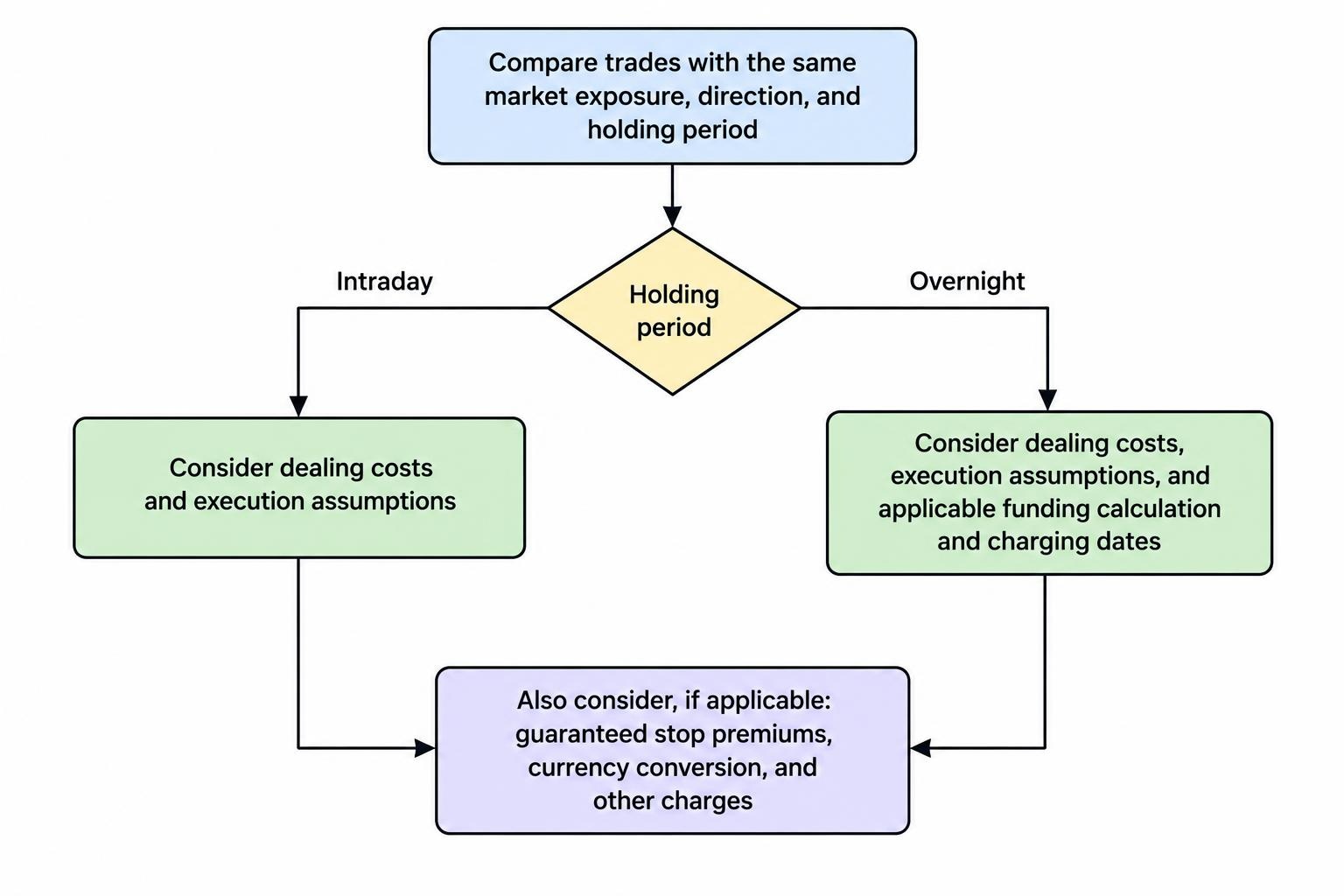
The spread betting cost study is the next step when the question changes from “What is the spread?” to “What would this trade cost?” Compare scenarios using the same market exposure, direction and holding period.
For an intraday scenario, examine dealing costs and execution assumptions. For an overnight position, include the applicable funding calculation and charging dates. Keep guaranteed stop premiums, currency conversion and other applicable charges visible rather than burying them in a combined score.
The FCA’s November 2025 price and value review examined spreads, commissions and overnight funding across providers, including spread betting firms. That broader assessment provides a useful basis for judging value beyond the headline spread.
Read Retail Client Loss Rates Correctly
Use the retail client loss rate analysis to assess what a published percentage measures before comparing providers. Record the figure, collection date and firm to which it applies. Do not treat an undated warning copied into an old review as a current observation.
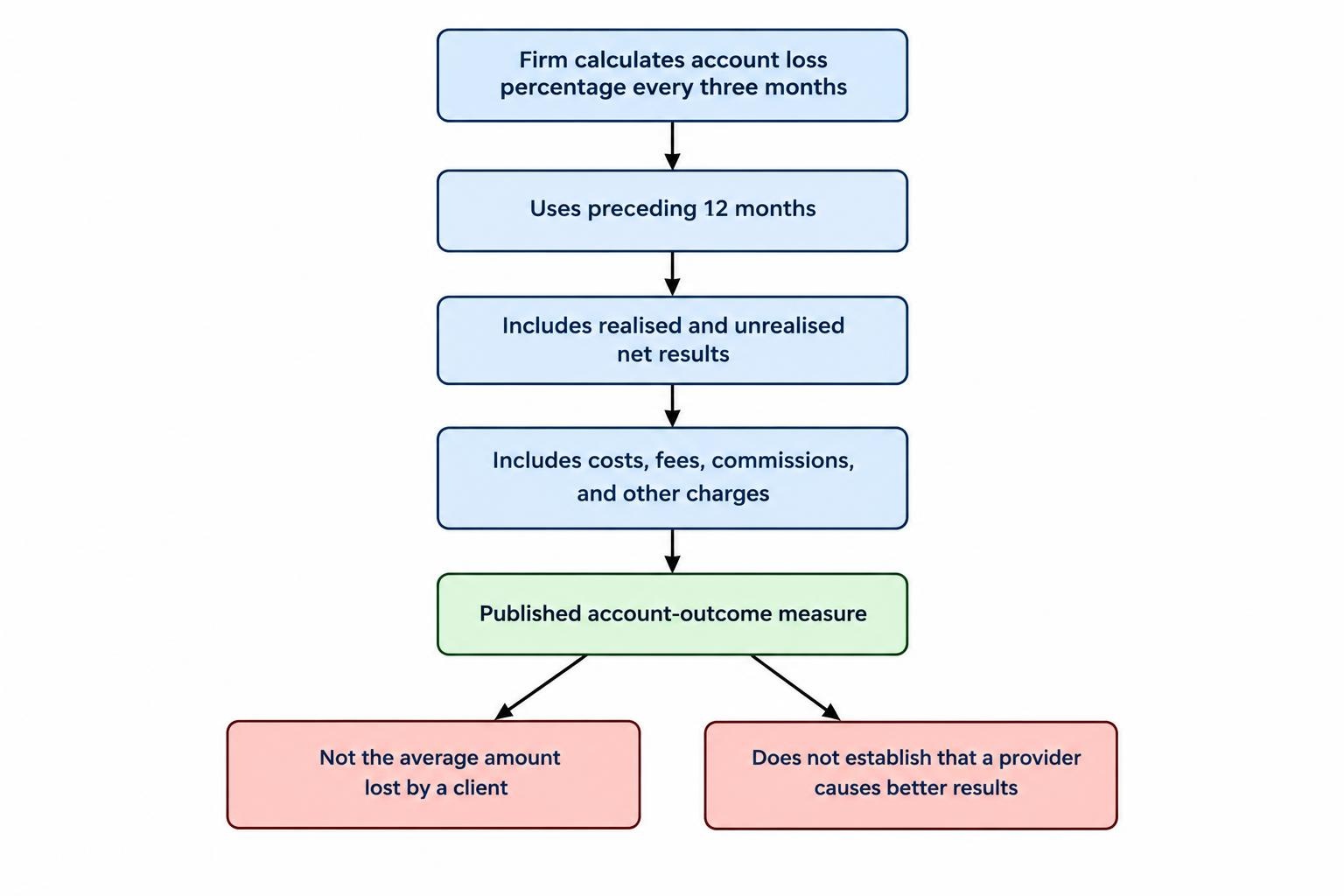
Under FCA rules for calculating retail account loss percentages, firms calculate the percentage every three months using the preceding 12 months. The calculation includes realised and unrealised net results and all costs, fees, commissions and other charges.
This is an account outcome measure, not a measure of how much the average client lost. Nor does a lower percentage establish that a provider causes better trading results. A comparison needs to distinguish the published observation from any proposed explanation for it.
Assess Execution Alongside Price
A useful review of broker execution quality should distinguish a displayed quote from the price at which an order actually fills. Look for the order type, requested price, executed price, timestamp and market conditions behind each observation.
Assess favourable and adverse slippage separately. A single average can hide very different experiences, especially if the sample combines routine trading with sharp price moves. Rejected orders and incomplete records also need explaining rather than disappearing from the dataset.
Guaranteed stop comparisons require a separate assessment. Compare the premium, eligible markets, permitted distances and contractual conditions, then check whether the cost scenario assumes the stop is triggered. Do not treat ordinary stop execution and guaranteed stop protection as interchangeable measurements.
Check Market Coverage and the Contracting Entity
Market coverage research should examine the instruments you intend to trade, not just the total number advertised. Check the relevant contract, trading hours, minimum stake and available order types. A long market list is not much help if the instrument you need lacks the terms you require.
Record the contracting legal entity alongside each comparison. Research attached only to a trading brand leaves an avoidable gap: the reader cannot clearly identify which account terms, disclosures and service arrangements were assessed. Keep UK comparisons separate from overseas offerings unless the differences are expressly part of the research question.
Judge the Evidence Before Using the Ranking
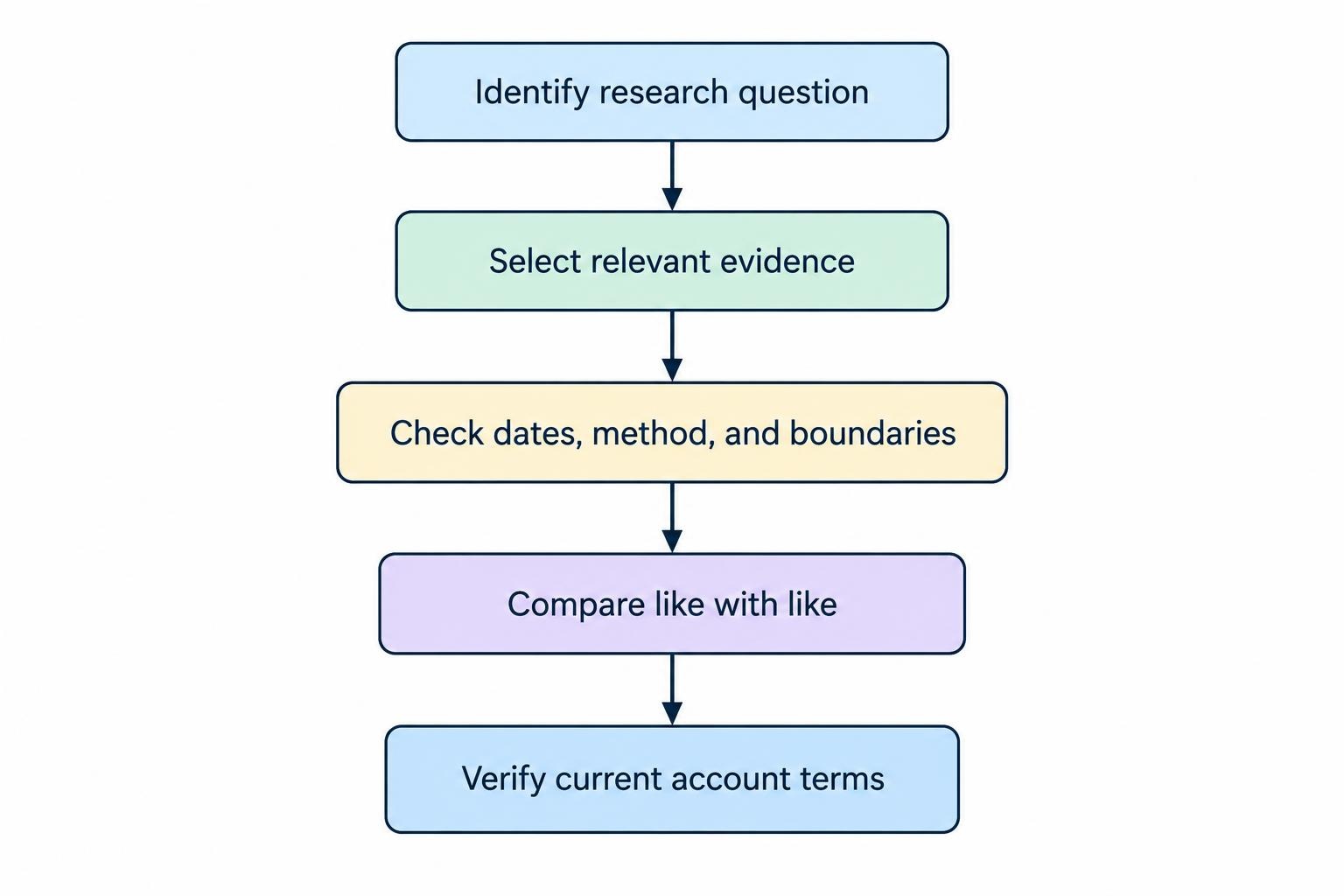
Before relying on a study, check four things:
- Dates: when observations were collected and when contractual terms were checked.
- Method: how providers, markets, trading sessions and samples were selected.
- Evidence: whether figures came from published documents, observed quotes, executed trades or hypothetical calculations.
- Boundaries: which costs, account types, markets and unusual conditions were excluded.
Keep measurements separate from estimates. A hypothetical overnight cost can support a comparison, but it is not a bill from an executed trade. Likewise, a small sample may answer a narrow question without supporting a market-wide verdict. Use the evidence to narrow your choices, then verify the current terms that would apply to your account.