Spread betting broker comparisons are most useful when you already have two providers in mind. The task is not to crown a winner for everyone. It is to establish which account better fits your markets, stake size, holding period and trading routine.
Start with the same trade at each broker, then compare the total cost and the controls available. A headline spread is one part of that decision, not the whole bill. Keep the comparison focused on UK spread betting accounts rather than mixing in overseas CFD accounts or professional pricing.
Choose a Broker Comparison
IG vs CMC Markets
Use the IG vs CMC Markets comparison to assess pricing, market access and platform requirements side by side. Begin with the instruments you actually trade. Check the relevant contract, minimum stake and trading session before giving weight to charting tools or the size of a market catalogue.
IG vs Spreadex
The IG vs Spreadex comparison provides another starting point for a shortlist. Compare everyday account use: placing orders, adjusting stops, reviewing charges and contacting support. Decide which functions you need before treating a longer feature list as an advantage.
CMC Markets vs City Index
Use the CMC Markets vs City Index comparison to structure your checks around costs and trade management. Test the workflow you expect to use, including mobile access if you manage positions away from a desk. Keep platform preference separate from the cost calculation.
What to Compare Between Spread Betting Brokers
Write down your requirements before reading rankings. Otherwise, it is easy to choose an account for features you will never use. Apply the same questions to both providers rather than comparing one broker’s strongest selling point with another’s weakest detail.
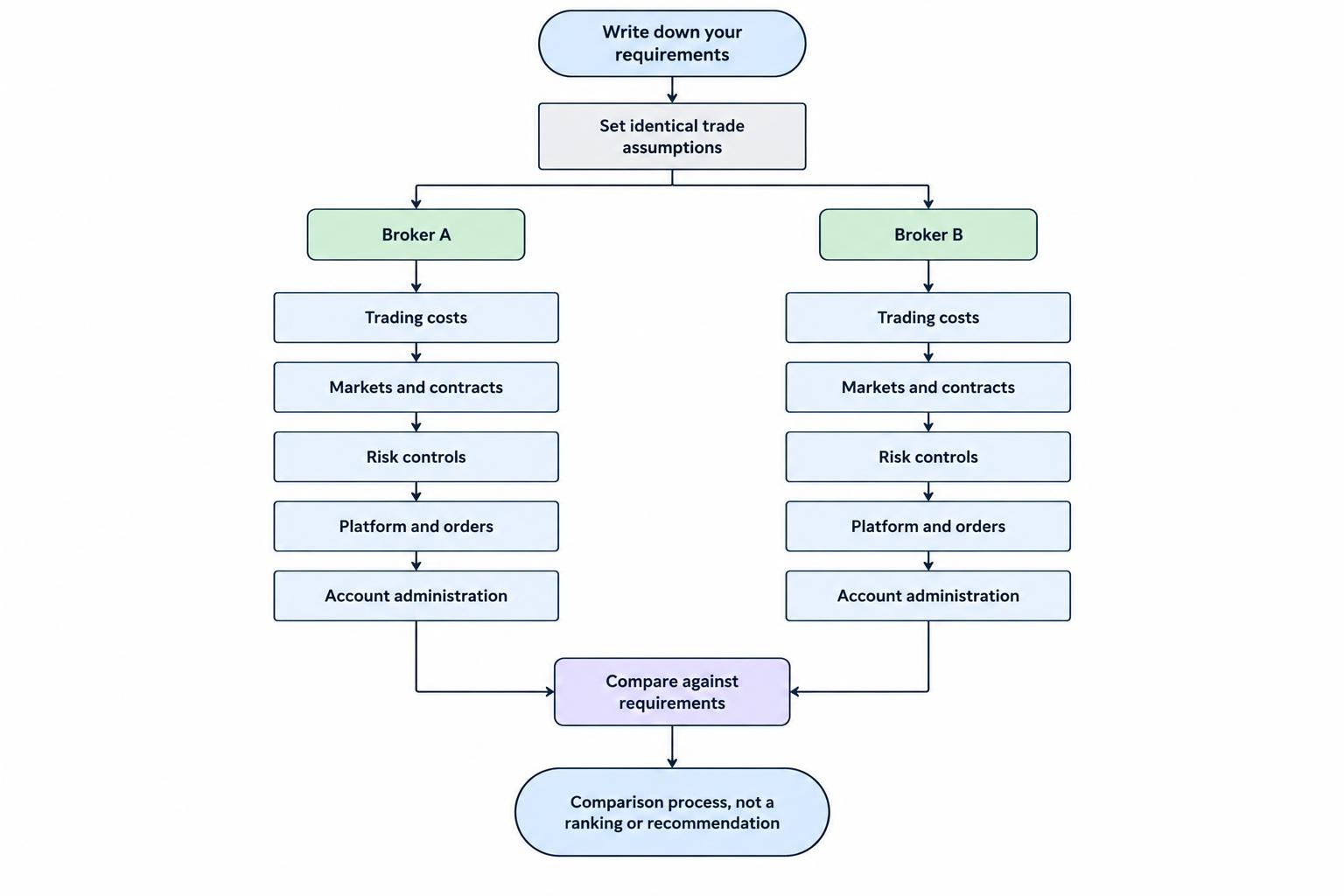
| Comparison area | What to check |
|---|---|
| Trading costs | Compare spreads during your trading hours, financing charges and any account or data fees. |
| Markets and contracts | Confirm the exact instrument, contract type, point value, minimum stake and dealing hours. |
| Risk controls | Check available stop orders, guaranteed stop terms, minimum distances and margin requirements. |
| Platform and orders | Try order entry, position amendments, alerts and account statements using your normal device. |
| Account administration | Read deposit and withdrawal terms, support hours and the complaints procedure. |
Compare the Cost of Your Trade
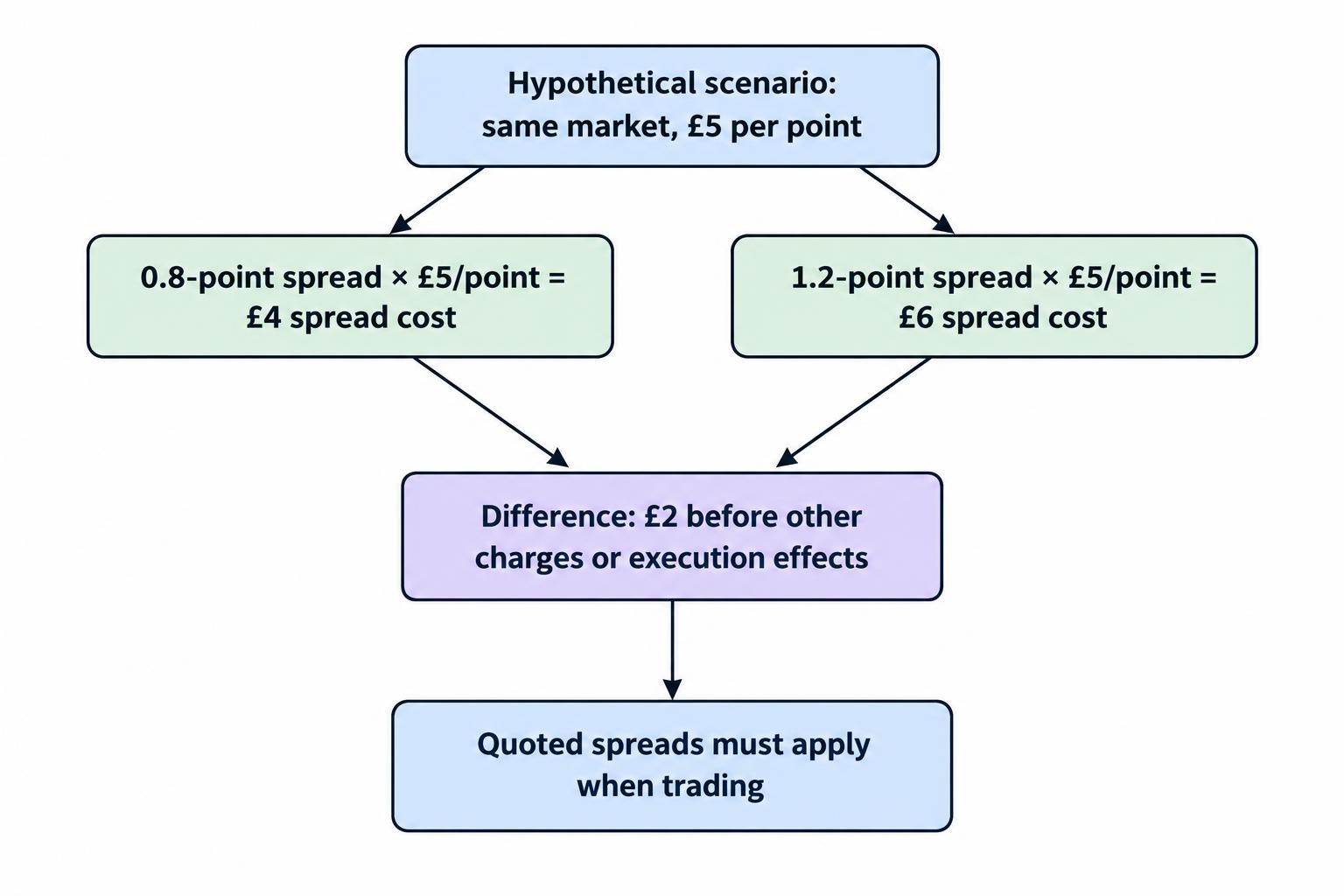
Use a worked scenario rather than declaring one broker cheaper across the board. Suppose two hypothetical accounts quote spreads of 0.8 and 1.2 points on the same market. At £5 per point, the spread costs are £4 and £6 respectively, assuming those quotes apply when you trade. The difference is £2 before other charges or execution effects.
For a position held overnight, add the applicable funding charges for the intended holding period. The FCA’s findings on derivative pricing and overnight funding identify concerns about both the level of charges and how clearly firms communicate them. The findings cover financial spread bets as well as CFDs. Do not stop your comparison at the opening spread.
Record when each quote was checked and whether it represents an advertised minimum or a price observed during your chosen session. Keep the stake, contract and holding period identical. Changing those assumptions halfway through produces a neat table, but a poor comparison.
Check the Account Before Applying
Confirm the legal entity that would hold your account, its authorisation and its permission to provide the service. Match its contact details against the official record using the FCA’s firm authorisation checking guidance. A familiar brand name is not a substitute for checking the firm named in the agreement.
Then confirm that you are comparing the same client classification and account type. Review the current terms before depositing, and use a demo account to check practical tasks where available. Choose against your written requirements, not a promotional headline. If neither account meets them, keep looking rather than forcing a winner.