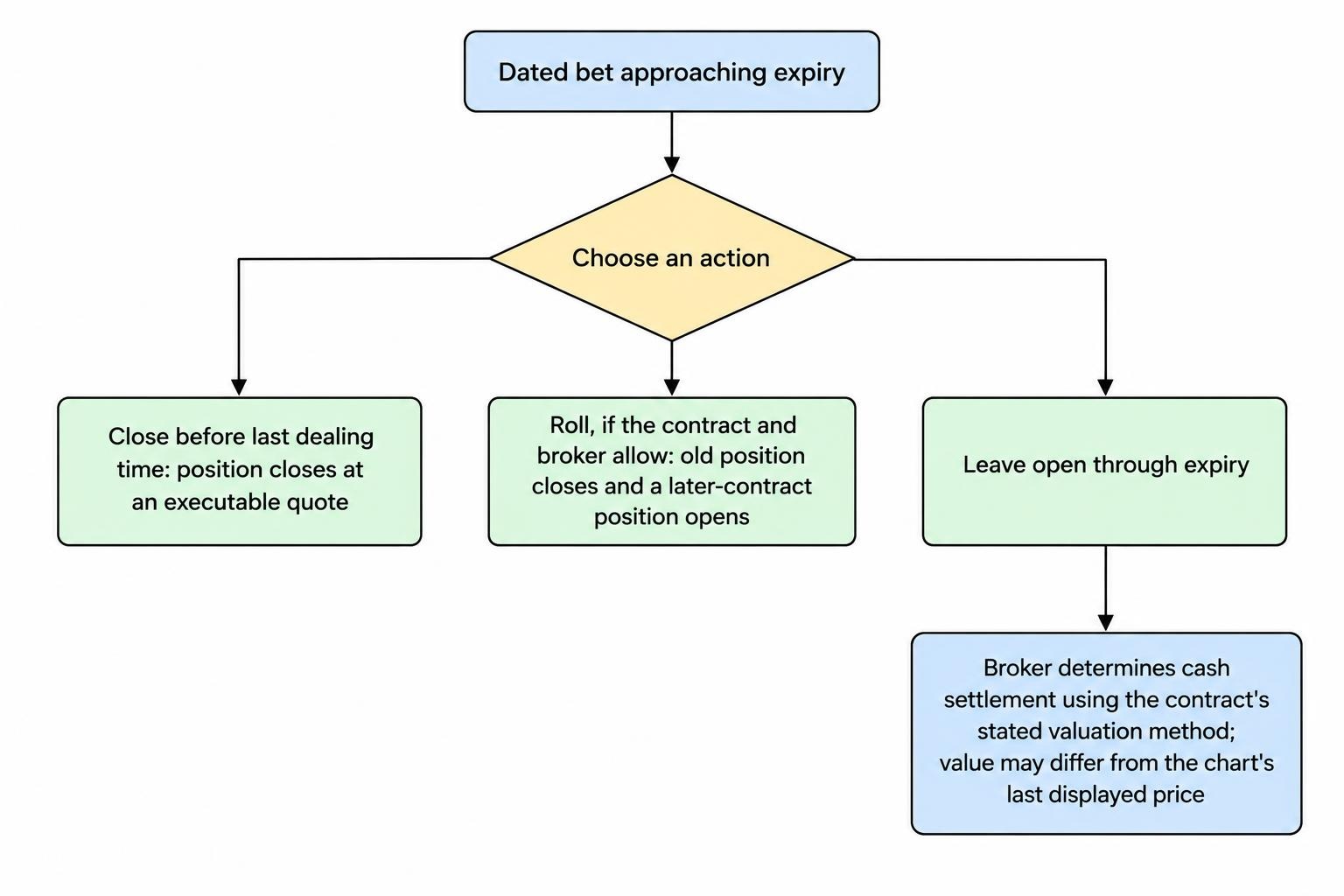
A spread betting expiry date is the scheduled end of a dated bet. If the position remains open, the broker settles it under the contract’s rules, or rolls the exposure into a later contract where its terms and your instructions allow. The deadline matters because it can determine when your trade ends, which price closes it and whether another position opens.
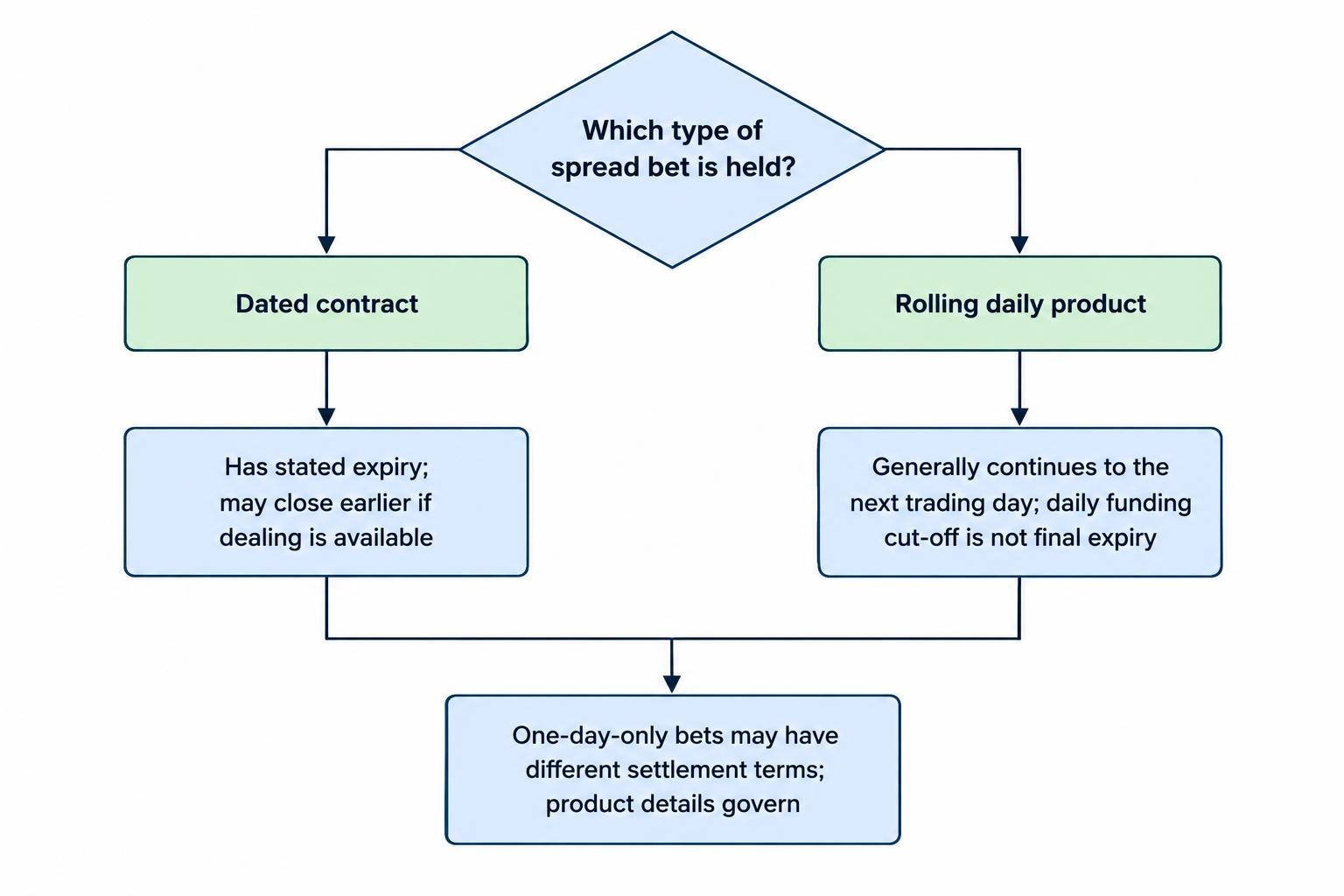
Not every spread bet has a near-term expiry. The first check is whether you hold a dated contract or a rolling product. The market name alone does not answer that question.
Which Spread Bets Have Expiry Dates?
Futures and forward spread bets have a stated expiry. Their names commonly include a contract month, such as June or September. That month identifies the contract; it does not mean you can trade it until the final calendar day of that month.
A dated bet has a maximum scheduled life, not a minimum holding period. You can normally close it before expiry while the broker accepts closing trades in that contract. You do not have to wait for settlement simply because you opened a quarterly position.
By contrast, daily funded bets generally continue from one trading day to the next rather than requiring a move into another quarterly contract. Their daily funding cut-off is not the same thing as a dated bet’s final expiry. Some providers use distant maturity dates or other contractual arrangements, so check the product details rather than treating “rolling” as a promise that the position can remain open forever.
Also distinguish a rolling daily product from a bet offered for one trading day only. Similar labels can hide different settlement arrangements.
How to Find the Exact Expiry Deadline
Use the broker’s market information sheet, contract details and current expiry notices. Record the full product name, contract month, date, time and time zone. A chart label such as “UK 100 September” is not enough to manage the deadline.
Several dates can appear around the same contract:
| Date or deadline | What it means for your position |
|---|---|
| Last dealing time | The final point at which the broker accepts trades in the expiring bet, subject to its dealing rules. |
| Expiry or valuation time | The scheduled point or process used to determine the bet’s final settlement value. |
| Rollover instruction deadline | The cut-off for requesting or changing a move into a later contract, where available. |
| Settlement posting date | When the resulting cash entries appear on the account, which may follow the valuation process. |
Exchange dates help identify what happens in the underlying market. The CME Group expiration calendar, for example, separates last trade, settlement and delivery events. Those exchange events are not a substitute for your spread betting contract’s own deadline.
Do not assume the broker’s last dealing time matches the underlying exchange’s final trading time. Check holiday arrangements and whether the quoted time uses UK time, exchange local time or UTC. If you intend to close manually, set your reminder before the last dealing deadline, not at it.
What Happens When a Spread Bet Expires?
If a dated bet reaches expiry without being closed or rolled, the broker calculates its final result using the settlement method in the contract terms. The spread bet settles in cash: you do not receive shares, index constituents or barrels of oil because the underlying reference market reaches expiry.
The settlement value need not match the last price you saw on a chart. It may use an official exchange settlement, an auction result or another stated calculation. Quarterly E-mini S&P 500 futures, for example, settle against a Special Opening Quotation based on constituent share opening prices. That value can differ from the displayed cash index, as set out in CME Group’s final settlement procedures. Whether a spread bet uses that value depends on its own terms.
Expiry Settlement Example
Suppose you buy a hypothetical index spread bet at 8,120 for £2 per point. You leave it open until expiry, and the contract rules produce a final settlement level of 8,158.
Gross profit = (8,158 − 8,120) × £2 = £76.
If the final settlement level were 8,085 instead, the result would be a £70 gross loss. For a short bet, the direction of the calculation reverses.
These figures exclude any separately applicable charges or adjustments. The opening level is the actual executed buy price, not a chart midpoint. The same spread betting profit and loss calculation applies whether you close voluntarily or the position reaches final settlement; what changes is how the closing value is determined.
Rolling a Spread Bet into the Next Contract
A rollover replaces exposure in an expiring contract with exposure in a later one. Economically, you exit one dated bet and enter another. A broker may process this automatically, offer it on request or require you to arrange the trades yourself. Check the default setting before relying on it.
Rolling does not erase a loss. If the old position closes below your entry on a long bet, that loss remains part of your trading result even though a new position opens. A new contract is not a clean slate.
The later contract can also trade at a different price. Suppose the expiring contract is around 8,200 and the next contract is around 8,225. The 25-point difference is not automatically an extra trading loss or a charge: the two prices refer to different contract periods. Assess the old bet’s closing result, the new entry and any rollover charges separately.
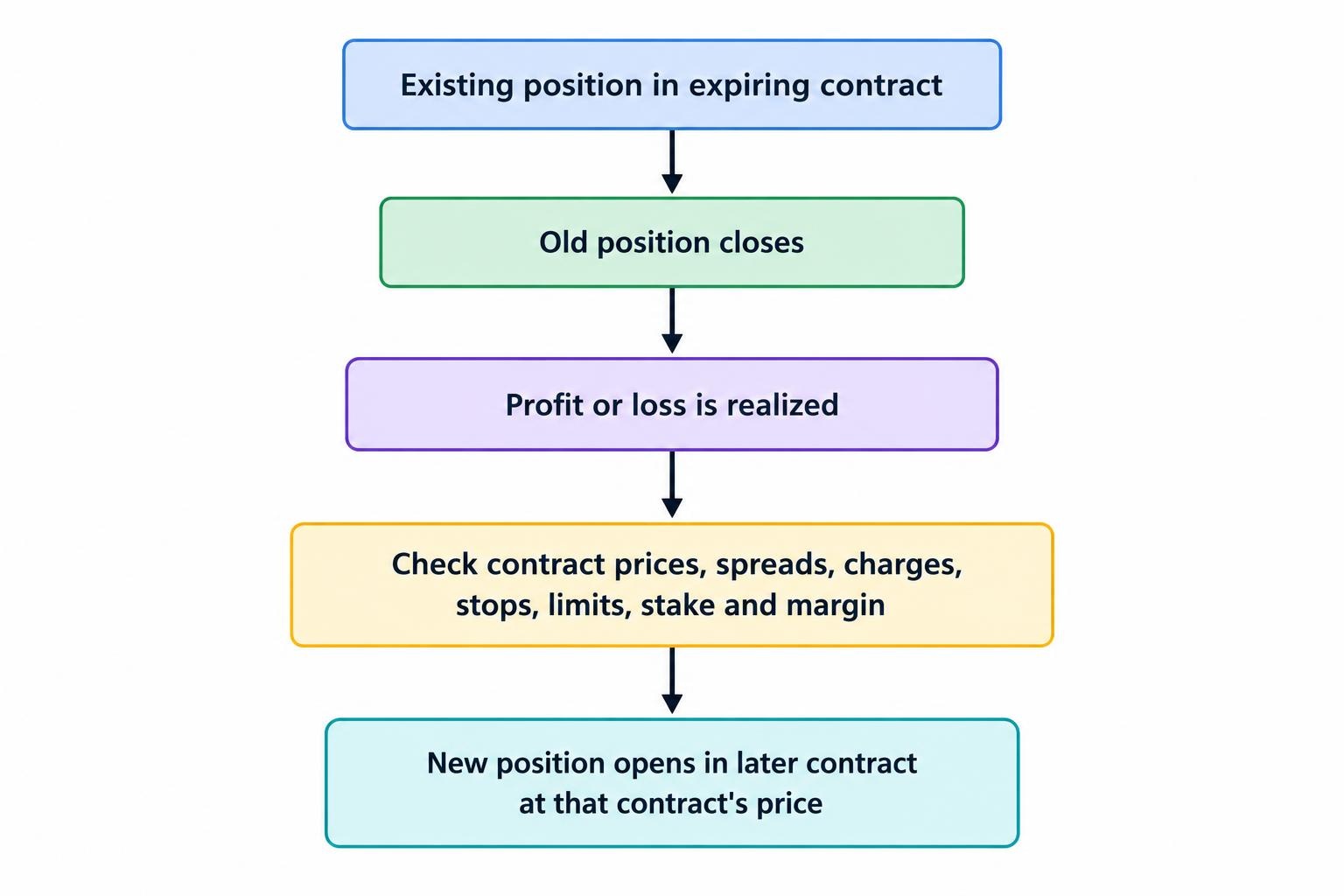
Ask how the broker handles spreads, rollover concessions and any other fees. Compare the full cost of continuing the exposure rather than looking only for a line labelled “rollover fee”. The guide to comparing total spread betting costs covers that broader calculation.
Also confirm what happens to attached stops and limits. Do not assume their numerical levels carry across unchanged when the new contract has a different price. Check the new trade confirmation, stake and margin requirement after the rollover.
Can You Close Before Expiry?
Yes, provided the contract remains available for closing trades and dealing conditions permit execution. Closing early lets you act on an available executable quote instead of accepting the eventual settlement calculation. It does not guarantee a better price.
Use the platform’s close-position function or follow its instructions for reducing the existing bet. An opposite trade in a different contract month does not close the expiring position. Depending on the account’s dealing settings, an opposite order may also create a separate position rather than offset the original one.
Review the relevant spread betting order types before using an order to manage your exit. A working order is not proof that the position has closed; check its execution status and the remaining open exposure.
Choose Your Expiry Plan Before Opening
Match the contract’s remaining life to the trade you intend to take. If your expected holding period extends beyond expiry, decide whether you will close beforehand or roll. Then check the practical requirements: instruction deadlines, available funds, new contract pricing and treatment of attached orders.
Expiry is not a risk control. A stop, insufficient margin or another contractual close-out event can end the position earlier. Spread betting remains a high-risk product within the FCA’s framework for contracts for difference and related products; knowing the expiry date does not make the exposure safe.
Before leaving a dated bet open, be able to answer three questions: when can you last close it, how will it settle, and will anything reopen automatically? If any answer is unclear, resolve it before the deadline removes your choice.