Spread betting trading hours depend on the market and the contract your provider offers. There is no single opening or closing time for a spread betting account. A UK share bet, a currency pair and an index bet can all have different dealing schedules on the same platform.
The practical rule is simple: check the hours for the exact instrument you intend to trade. An exchange timetable provides a reference point, but it does not guarantee when your provider will accept, execute or close your bet.
Market hours and provider dealing hours are different
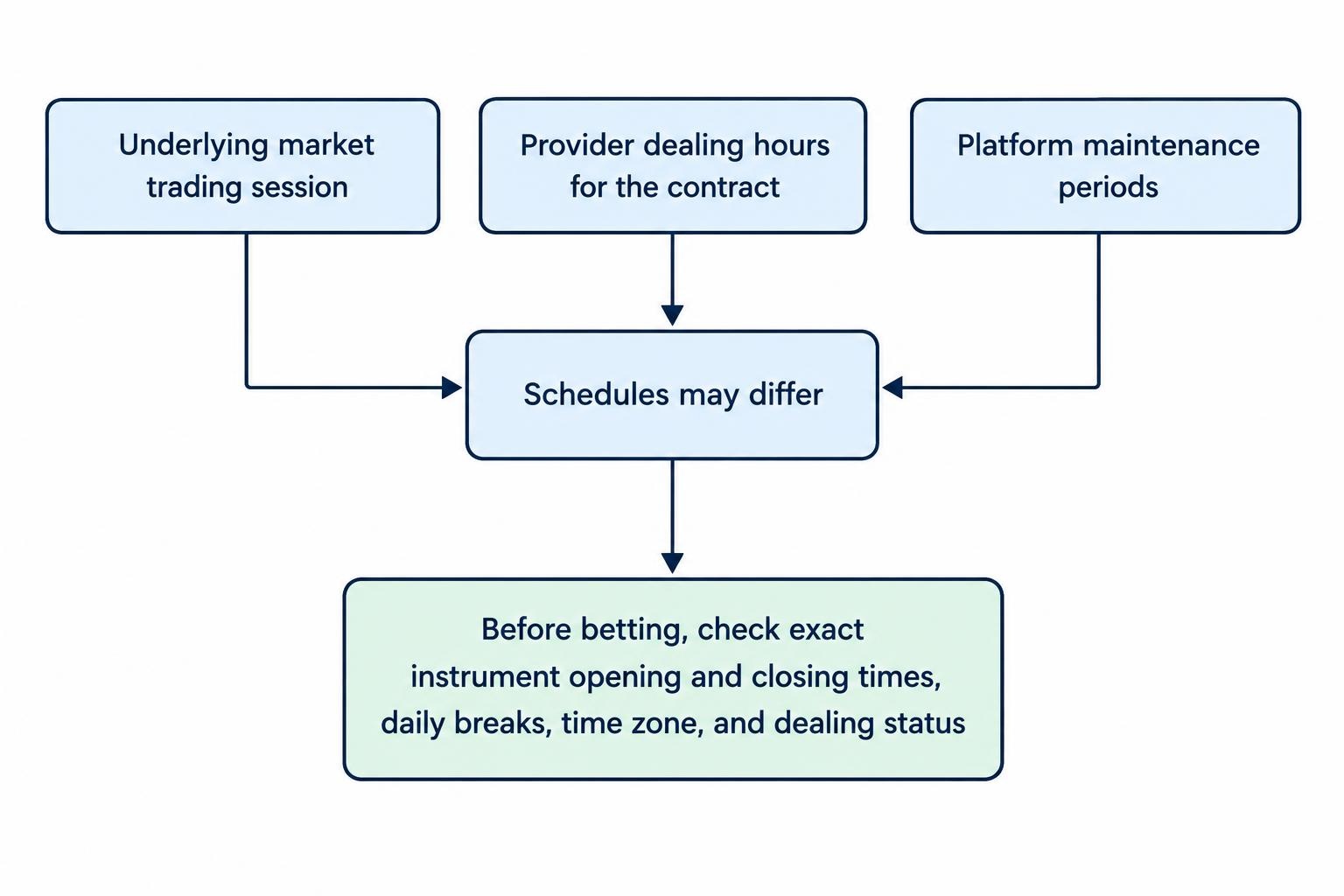
Keep three separate schedules in mind. The underlying market has its own trading session. Your spread betting contract has provider-defined dealing hours. The platform may also have maintenance periods when dealing or account functions are unavailable.
These schedules need not match. An index contract might be available outside the regular session for its constituent shares. Conversely, a provider might stop quoting a product even though trading continues elsewhere.
Before placing a bet, open its market information panel or contract specification. Check the opening time, closing time, daily breaks and time zone. Also establish whether the displayed status allows normal dealing, closing existing positions only, or order entry without immediate execution. Being logged in is not the same as being able to trade.
Trading hours by market
The table below gives reference sessions rather than a universal spread betting timetable. Times are UK local time unless otherwise stated, and normal sessions exclude holidays and exceptional closures.
| Market | Reference hours | What to check |
|---|---|---|
| UK shares | 08:00 to 16:30 for the normal session in the London Stock Exchange trading hours. | Whether your provider supports dealing around auctions or outside the regular session. |
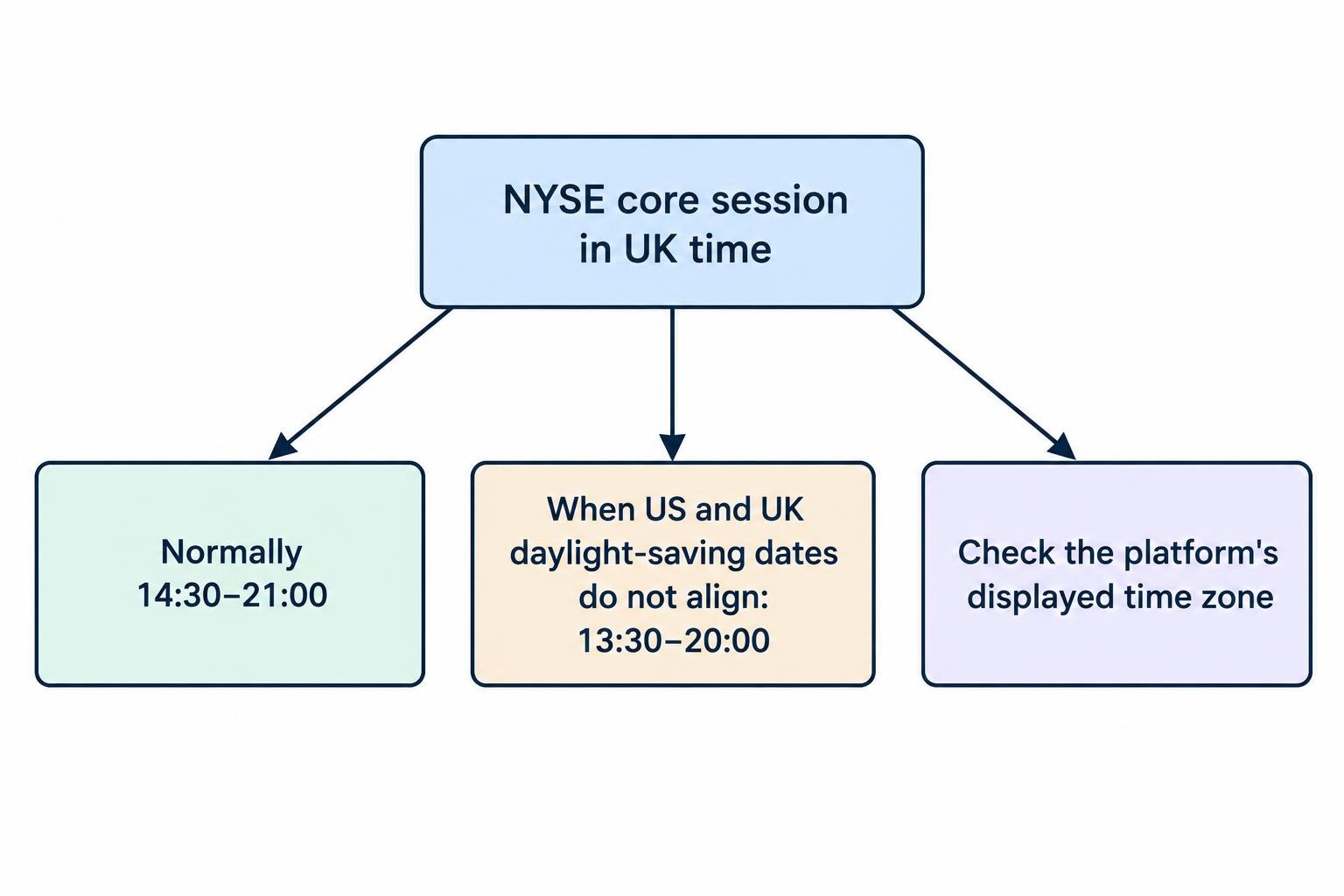
| US shares | The NYSE core trading session runs from 09:30 to 16:00 Eastern Time, normally 14:30 to 21:00 UK time. | Clock-change differences and availability outside the core session. |
| Forex | Currencies trade around the clock across international markets; the Bank of England’s exchange-rate explainer describes this continuous global market. | The provider’s weekly opening and closing times, plus any daily interruption. |
| Indices | Distinguish the underlying share session from the hours of the quoted index contract. | Extended dealing, session-dependent spreads and daily breaks. |
| Commodities | Hours depend on the commodity and underlying contract. | Daily pauses, expiry restrictions and holiday schedules. |
For currencies, avoid treating “24-hour trading” as a promise of uninterrupted access every day. Use the forex trading hours guide to distinguish the trading week from its regional sessions.
For indices, identify which session matters to your trade. A position based on the opening of the underlying share market needs a different timetable from one intended to run overnight. The index trading hours guide covers that distinction.
Do not copy an oil schedule across to gold, natural gas or agricultural markets. Check each contract separately, using the commodity trading hours guide for the market-level detail.
UK time, GMT and daylight saving
“UK time” and “GMT” are not interchangeable throughout the year. The UK uses GMT in winter and British Summer Time, one hour ahead, during summer. The UK government’s clock-change calendar gives the changeover dates. Record whether a timetable follows London local time or a fixed GMT offset.
US sessions need another check because the two countries change clocks on different dates. The NIST daylight saving timetable sets out the US schedule.
During the mismatch periods, the NYSE core session translates to 13:30 to 20:00 UK time rather than the usual 14:30 to 21:00. Check the platform’s displayed time zone before setting alerts or placing timed orders. A chart labelled UTC may not match the clock on your phone.
Trading outside the underlying market’s main session
If your provider quotes an index after its constituent shares stop regular trading, you are dealing at the provider’s available price, not buying or selling those shares in their normal session. Read the contract’s pricing terms rather than assuming the quote must match the last published cash index value.
Compare the actual bid and offer before placing an order. A wider spread raises the movement needed to reach break-even. At £5 per point, a two-point spread represents a £10 starting cost; an eight-point spread represents £40, assuming no price movement or other charges.
Longer access can help you manage an existing position, but it does not make every hour equally suitable for a new trade. Check the available stake size, order restrictions and spread against your plan. “Open” is a dealing status, not a recommendation.
Daily breaks, holidays and weekends
A daily trading break is different from the end of the trading week. Mark both on your schedule, particularly if your planned exit falls close to a pause.
Holiday arrangements also vary by product. The CME Group product and holiday schedules distinguish regular hours, altered sessions and trading statuses. Use exchange calendars to identify possible changes, then confirm your provider’s own arrangements for the spread betting contract.
If a platform lists a weekend market, check whether it is a separate instrument and how its positions relate to weekday contracts. Do not assume that weekend availability lets you close an existing weekday bet.
What happens to orders when dealing stops?
Submitting an order does not necessarily mean it can execute immediately. Check whether the provider accepts orders during closures, whether you can amend or cancel them, and which price will trigger them when dealing resumes. Also check when day orders expire.
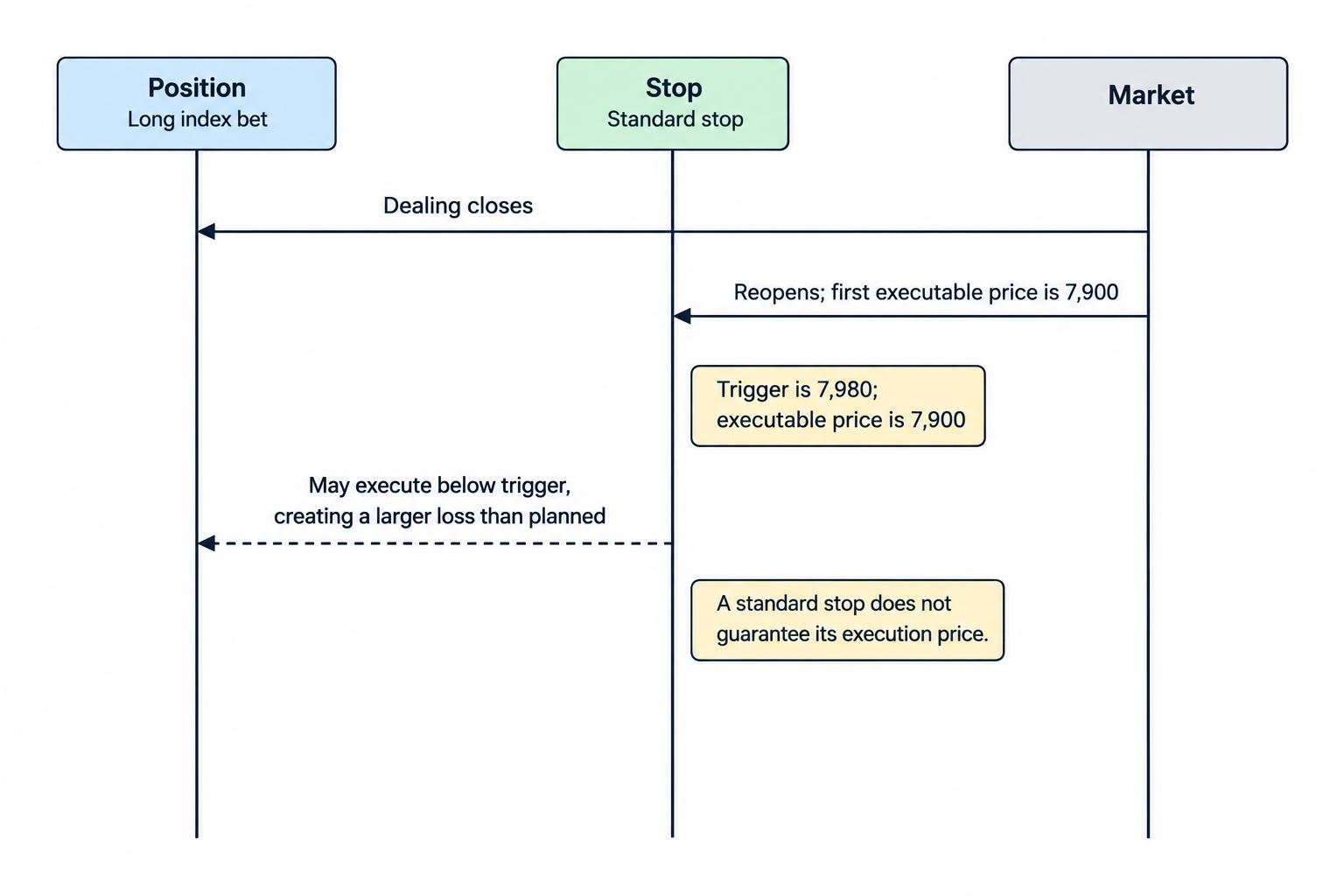
A standard stop loss does not guarantee its execution price. Suppose a long index bet has a stop at 7,980, but the first available executable price after a closure is 7,900. The stop may execute below its trigger level, producing a larger loss than planned.
This is part of market gap risk. Guaranteed stops have separate terms, charges and availability; do not assume that every contract or trading session supports them.
Trading hours are not financing cut-offs
A market can remain available for dealing while passing an overnight financing cut-off. Closing before midnight is therefore not, by itself, evidence that a position avoids financing.
Check the contract’s charging time separately from its trading schedule. If a position may cross that cut-off, review the costs and practical issues involved in holding spread bets overnight. Expiry and rollover deadlines also need their own calendar entries.
Check the timetable before opening a position
A short check is enough, provided it covers the right details:
- Confirm the exact contract name and its displayed time zone.
- Check today’s dealing hours, daily breaks and holiday notices.
- Allow time to exit before any scheduled closure.
- Confirm order expiry, stop conditions and financing cut-offs.
Plan around the hours you can actually monitor and manage the position. If the trade depends on an exit during a period when dealing may be unavailable, change the plan before opening it—not after the dealing button disappears.